Chat

Recover 11–13% more non-ferrous metals—simply through better screening

Switching from a Trommel Screen: How Recyclers Can Significantly Increase Metal Recovery Through Precise Classification

The throughput was just right. The quality of the screening does not.
That was exactly where the metal recycler Koslow found himself. The drum screen used was indeed able to process the required amount of material. However, classifying the input material by size was not precise enough: a significant amount of fine material and long pieces unintentionally ended up in the target size range for the downstream sorting equipment.
Together with SPALECK, Koslow therefore tested his various input materials at the SPALECK TestCenter for Recycling Technology. The drum screen was subsequently replaced by a SPALECK screening machine specifically designed to meet the requirements of metal recycling.
The result: Since then, Koslow has been recovering 11 to 13 percent more nonferrous metals solely through optimized screening.

Aerial view of a SPALECK screening machine for metal recycling. The machine is integrated into a metal recycling plant and feeds a total of three fractions, sorted by size, into the plant.

Recovery of Non-Ferrous Metals

+ 11–13 percent

Screening Quality

Precise sorting by size

Fine particles and long pieces

Reliably screened

PROJECT PROFILE

Metal recycler Koslow benefits from switching from a trommel screen to a recycling screen

As an expert in metal recycling, Koslow processes more than 180,000 metric tons of metal-containing materials annually. These include, among other things, end-of-life vehicles, scrap iron, light and heavy shredder fractions, and waste electrical and electronic equipment. For further sorting, the company needs the input material to be precisely classified by size. This is exactly where the joint optimization of screening technology with SPALECK began.

Customer

Iwan Koslow GmbH & Co. KG, Germany

Industry

Metal Recycling / Non-Ferrous Metal Processing

MATERIAL

Non-ferrous metals, such as aluminum, stainless steel, copper, brass, and alloys

Process

Crushing, screening, and sorting of 180,000 metric tons per year

REFERENCE TOPICS

Replace the drum screen machine to optimize screening quality

SPALECK SOLUTIONS

IN ACTION

Koslow uses these SPALECK machines

recycling screen, waste screen, recycling, Spaleck

Classification

The “Wertstoffsieb” vibrating screen is specially optimized for metal recycling at Koslow. As a result, the screening machine produces very precise screen cuts with virtually no need for cleaning.

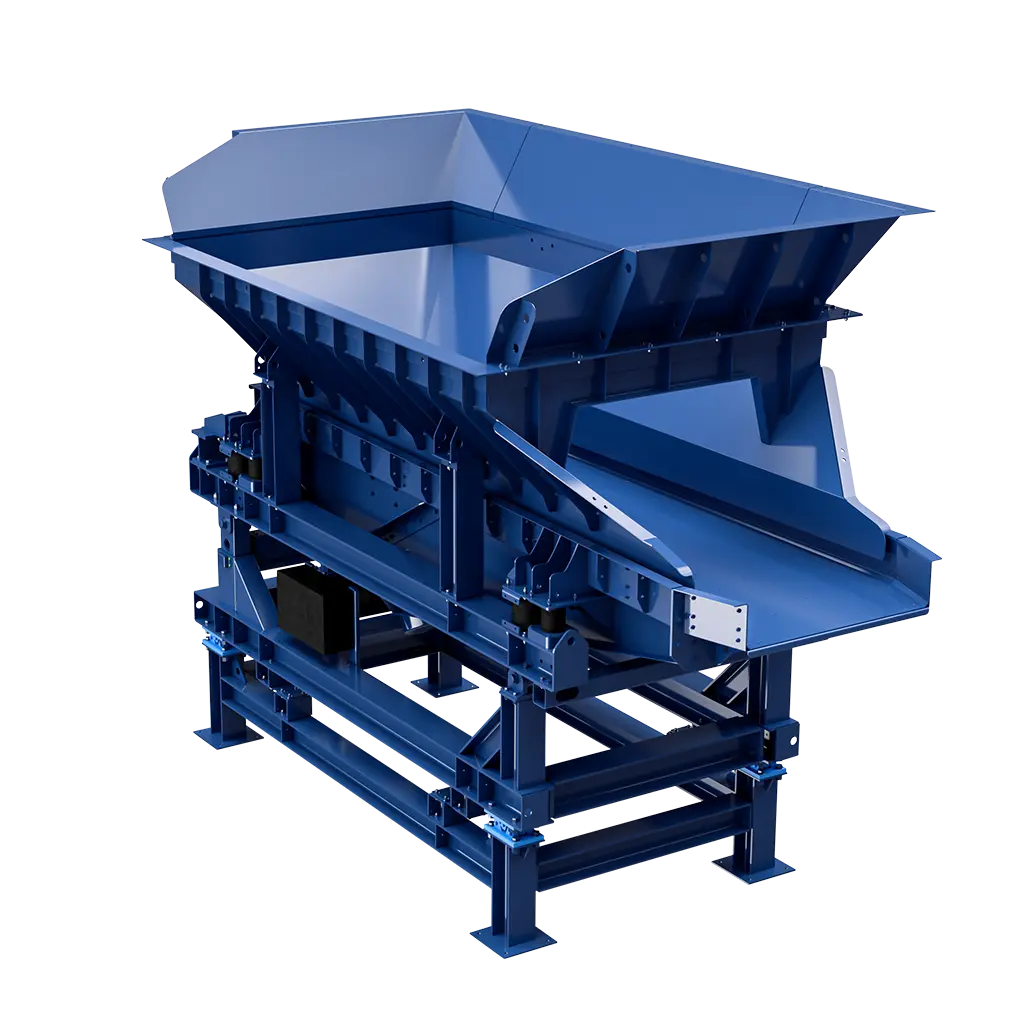
SPALECK ActiveFEED Feed Hopper for optimal material feed to sorting machines in recycling.

Optimizing the Performance of Sorting Machines

Koslow now has eight ActiveFEED units in operation. These optimize the performance and cost-effectiveness of the sorting machines. As a result, the company achieves higher throughput in less time and with higher sorting quality.

A man in a white shirt is pointing to the side.

Discussion with our screening technology expert in the recycling of non-ferrous metals

Discuss the recycling project now

Learn more about optimized screening and material feeding for your existing or new metal recycling process. Let’s discuss your materials and process requirements. I’d be happy to show you some references and other examples of my work.

THE INITIAL SITUATION

Conveying of fine material and long pieces through a trommel screen

Koslow had reached a point where the quality of the downstream sorting could no longer be improved using the existing screening technology.

On the contrary, the drum screen technology used had a negative impact on sorting quality and the material recovery rate in metal recycling.

The drum screen used did achieve the required throughput. The problem lay elsewhere: Due to the design and operating principle of the trommel screen, large quantities of the fine fraction—as well as the long particles—fell into the target fraction as the material rotated.

Unlike with vibrating screens, it was not possible to guarantee a narrow particle size distribution here. In practice, the grain size distributions produced by the drum screen did not meet the requirements of the downstream sorting equipment.

Despite various adjustments to the drum screen, large quantities of fine material and numerous long pieces continued to end up in the target fraction.

This made screening the limiting process step: High-quality sorting technology was available—but the material did not arrive there in the desired size distribution.

“We had reached a point where we could no longer improve our sorting quality.”
Michael Kannengießer
Project Manager, Iwan Koslow GmbH & Co. KG

Screened fine material from metal recycling using the Spaleck 3D Combi
A close-up view of a SPALECK conveyor trough used in metal recycling. The material is fed to it very consistently via an ActiveFEED feed hopper, and it in turn delivers it to the downstream sorting machine at the optimal feed width and volume. The image clearly shows how the metal fractions are separated, allowing them to be easily detected and sorted by the sensor sorter.

Project Goal

Increase the material recovery rate through precise screening of the input material

Efficient Sorting for Business Success

CONTINUOUS IMPROVEMENT OF THE SCREENING PROCESS

In the video, Christian Lake (SPALECK) and Michael Kannengießer (Koslow) provide detailed information about the screening technology used. They also report on how Koslow, a metal recycling company, is working with SPALECK, a manufacturer of conveying and separation technology, to continuously optimize the processing workflow. So the video isn’t just about screening technology, but also about material feeding for sensor sorting.

You are currently viewing a placeholder content from YouTube. To access the actual content, click the button below. Please note that doing so will share data with third-party providers.

More Information
Aerial view of the metal recycling facility operated by Iwan Koslow GmbH & Co. KG. In the foreground and spread out along the line, you can see a total of six SPALECK ActiveFEED feed hoppers. These supply the individual metal recycling lines on a very continuous basis. The ActiveFEED units were installed as part of a retrofit project and replace the previous feeding systems, which were causing problems and inefficiencies in plant operations.

The Spaleck Solution

Use of Special Screening Technology for Metal Recycling

The significant improvement in screening efficiency was achieved, in part, by switching to a screening technology better suited for screening metals (recycling screen).

Christian Lake: “A vibrating screen offers the advantage that there is no tumbling in a drum. This means that small parts and long parts cannot fall straight through the holes.

However, simply switching to a vibrating screen is still not enough for metal recyclers to achieve optimal screening results.
The key advantage comes from the three-dimensional screening technology, combined with the machine’s optimally adjusted vibration characteristics and the use of custom screen liners tailored specifically to the customer’s material.
“This not only ensures the desired screening quality but also allows the recycler to benefit from virtually maintenance-free operation and high cost-effectiveness.”

Customer Benefits

Operational Experience at Koslow

How do I find the right screening process to achieve my recycling goals?

Replacing the drum screen and changing the screening method

At Koslow, extensive screening tests were the key to achieving more economically successful screening results.

To this end, Koslow used the free SPALECK service to test his daily feedstock on two large-scale plants equipped with feeding and screening technology. In collaboration with the customer, we investigated how the materials can be screened and which screening technique can be used to reliably produce the required fractions.
It was only after these tests that the decision was made to adopt the new machine. The drum screen was replaced by a SPALECK screening machine specifically optimized for metal recycling.

Key customer benefit: Thanks to the SPALECK ModularDESIGN+ principle, the screening machine remains so adaptable that it can still be further optimized and customized even years down the line.

This principle is useful not only in metal recycling, but also, for example, in slag processing, e-waste recycling, as well as in composting and household waste. The reason is simple: In day-to-day recycling operations, material compositions, particle sizes of input materials, and even the recycler’s economic goals and opportunities are constantly changing.

The SPALECK TestCenter offers recycling companies the opportunity to optimize their material processing using SPALECK screening machines and conveyor systems.

Technology

Technical Details at a Glance

The screening process at Koslow has been consistently optimized to meet the company’s process and processing objectives: high throughput and screening results optimized for downstream sorting.

SPALECK 3D Screening Technology

The SPALECK recycling screen accurately and reliably separates a wide variety of input materials—such as light shredder fractions, heavy shredder fractions, auto shredder residue, and electronic scrap—into the particle sizes specified for the sorting process.

Screen liners optimized for SLF, SHF, ASR, and others.

The selection of screen media is based on the material properties of the metal fractions. Modifications—such as those required when changing materials—can be made quickly and easily. With SPALECK, customers benefit from new developments and optimizations.

Reliability During Operation

Trouble-free operation, optimal accessibility, and useful features such as SPALECK CONNECT technology and the LubricationCONTROL automatic central lubrication system support the operator and operating personnel and ensure highly cost-effective operation.

An Important Contribution to the Entire Line

The SPALECK screening machine could be easily integrated into the existing line through a retrofit. Thanks to our team-oriented approach and the understanding that optimal screening contributes to optimal sorting results, screening now plays a very important role in overall performance.

Your contacts for SPALECK Conveyor & Separation Technology

Would you also like to review or optimize your screening process, or would you like more information about our metal recycling projects? Then just get in touch with us. We’re always happy to help!

TRANSFERABILITY for Your Processing

When is it a good idea to replace a screening machine?

If the recovery or sorting quality of an existing metal processing facility does not meet expectations, the cause may not lie in the sorting technology used. It’s worth taking a look at the material’s classification, especially when:

If even one item can be checked with “Yes,” you should determine whether a different screen machine or screen deck configuration would yield better results with the actual input material. The Koslow example shows just how significant the impact can be: an 11 to 13 percent increase in the amount of non-ferrous metals recovered—simply by optimizing the screening process. The result is specific to this project and cannot be generalized to other facilities. The underlying question, however, is this: Is your downstream sorting technology already getting the most out of the material—or is the screening process limiting the results?

In the foreground, a SPALECK ActiveFEED feed hopper feeds a mixture of metals with great precision onto a conveyor belt and into an downstream eddy current separator. In the background, you can see a second ActiveFEED feeding material to another sorting line for metal recycling.
A man in a white shirt points to the side, which fits the theme.

Screening Technology for Your METAL RECYCLING

Discuss the next step now

Would you like to improve your metal recovery, or are you not entirely satisfied with the classification performance of your existing screening equipment? Then let’s talk about your screening process and your material. I’d also be happy to show you more references for SPALECK screening machines.

More SPALECK Success Stories

Everything You Need to Know

FAQs

Here are some questions about the SPALECK Activefeed feed hopper. We’d be happy to help you find the right solution.

The ActiveFEED feed hopper pays for itself from day one, as it significantly increases the recovery rate of non-ferrous metals in metal recycling, for example. In many cases, the payback period is less than half a year. We would be happy to advise you personally on this matter. Examples such as STENA Recycling and KMR Recycling show you exactly how this works.

Yes, you can easily retrofit the SPALECK ActiveFEED feed hopper. Many of our customers are replacing their standard batch sizes and, as a result, achieving significantly better and more profitable sorting results. Check out this feedback from our client STENA to see how easy the replacement process is.

Yes, the ActiveFEED is ideal as a feeding system for X-ray sorting technology, such as XRF or XRT sorting. In XRF and XRT sorting machines, it enables fully automatic, continuous material feeding. This allows recycling companies to use ActiveFEED to automatically feed their sorting machines with the optimal amount of material for each specific sorting machine and type of recyclable material. This increases both sorting efficiency and volume. In addition, sorting quality can be significantly improved through optimal feeding. See also the case study by STENA Recycling and the recycling expert Skrotfrag.

Testing your recycled materials at the SPALECK TestCenter is free of charge. This way, you can test high-performance recycling equipment such as the 3D COMBI screening machine or the SPALECK ActiveFEED feed hopper. Here’s how SPALECK’s conveying and separation technology can help you—at a glance.

READY FOR BETTER SCREENING

Together, we'll optimize your recycling process