













Fully desalinated water is the foundation for long-lasting systems and flawless surfaces. Our desalination plants and specialized systems for producing deionized water remove unwanted minerals and salts so thoroughly that the result is high-quality process water that leaves no room for limescale or corrosion. This method of water treatment ensures consistent quality, protects your machinery, and reduces the pollution load in the wastewater.
Deionized water leaves no mineral deposits. After the drying process, your workpieces will be completely free of stains and streaks. This guarantees you a first-class surface finish and saves you the cost of time-consuming manual post-cleaning or scrap.
Saltwater is the natural enemy of your metal components. By treating water to produce pure process water, you eliminate the cause of pitting and chemical corrosion. They provide long-term protection for your high-value equipment, preserve its value, and help you avoid costly unplanned repairs.
Even the thinnest layers of lime act as insulation and cause your energy consumption to skyrocket. Deionized water keeps heat exchangers and pipes clean. If you rely on ultrapure water, your production will consistently operate at optimal efficiency, which will significantly reduce your energy costs.
The high purity of the water eliminates the need for extensive use of water treatment chemicals. This not only helps protect the environment and your budget, but also makes it easier to comply with wastewater discharge limits. You’ll benefit from significantly longer maintenance intervals and a production process that runs smoothly.
Substances such as lime, salts, or particles can jeopardize your processes and result in high follow-up costs due to maintenance and downtime. Targeted water treatment is therefore not a luxury, but a prerequisite for safe operations. We turn raw water into reliable ultrapure water, thereby protecting your equipment and reducing your wastewater load at the same time.
Every type of water poses specific risks to your equipment. We carefully analyze your water parameters to remove only what is harmful to your equipment. This ensures you receive exactly the treatment your process water requires—cost-effective, safe, and perfectly tailored to the requirements of your wastewater.
To prevent corrosion and staining, we offer integrated systems for full desalination. Our comprehensive solutions often combine a highly efficient reverse osmosis system with downstream mixed-bed ion exchangers to produce excellent ultrapure water. This precise treatment ensures that your process water has the lowest possible conductivity and protects your entire infrastructure.
High nitrogen loads require specialized approaches. We integrate high-performance ion-exchange systems into your process chain that specifically remove nitrate and nitrite. Through this controlled treatment process, we ensure the quality of your process water and make it easier for you to comply with the limits for your wastewater.
To protect your products from discoloration, we use a combination of methods. Our comprehensive solutions use precipitation and flocculation in combination with modern lamella clarifiers to reliably remove metals such as copper and nickel. In this way, the treatment process ensures clean process water and metal-free wastewater.
When it comes to microbiological purity, we don’t rely on individual solutions, but on comprehensive protection. By using UV systems or dosing systems as part of our water treatment process, we effectively prevent biofilm formation. This ensures the hygiene of your systems and provides biologically stable process water.
To treat complex organic contaminants, we incorporate activated carbon filters or nanofiltration systems into our treatment designs. These stages reliably capture pesticide residues before they contaminate your process water or compromise the quality of your final products and wastewater.
We offer specialized comprehensive solutions for modern contaminants such as PFAS. Following the highly efficient concentration of the molecules, the crucial step involves their permanent binding to activated carbon or special resins. It is this targeted adsorption that prevents the formation of a highly contaminated liquid concentrate that is expensive to dispose of. This protects your production, ensures the cost-effective disposal of residues, and prevents critical substances from being released into the environment.
Trouble-free operation starts with pre-cleaning. Our filtration systems, such as automatic backwash filters and sand filters, form the foundation of our comprehensive solutions. They completely remove particles and microplastics to protect downstream systems used to produce process water from wear and clogging.
Every industry has its own water quality requirements. Our systems are designed to meet precisely these specific parameters and to make your process water a key factor in your production success.
Before the actual desalination process begins, all undissolved substances must be removed. Our robust filtration systems reliably remove particles, rust, and microplastics. This first stage of treatment is essential for protecting the sensitive membranes and resins in the downstream systems from mechanical wear and clogging.
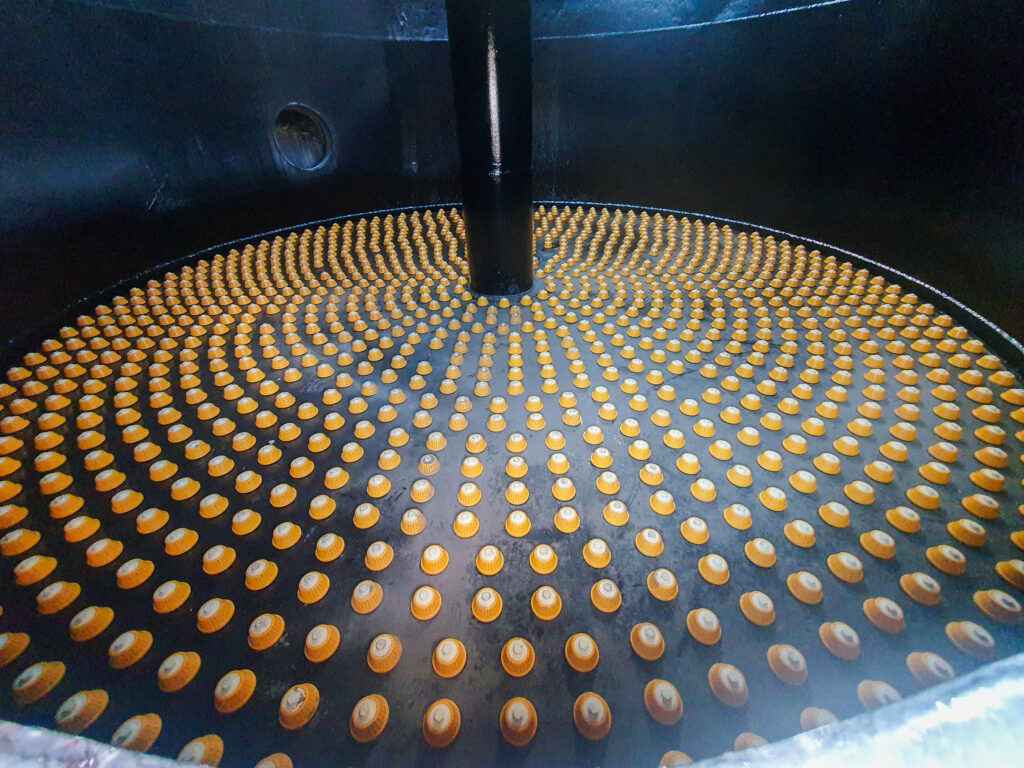
In this stage, the hardness-causing substances are exchanged for sodium ions. The use of our water softeners and ion exchangers makes the water soft and chemically stabilized. This prevents scale formation in your systems and optimizes the performance of the subsequent desalination steps in the production of high-quality process water.
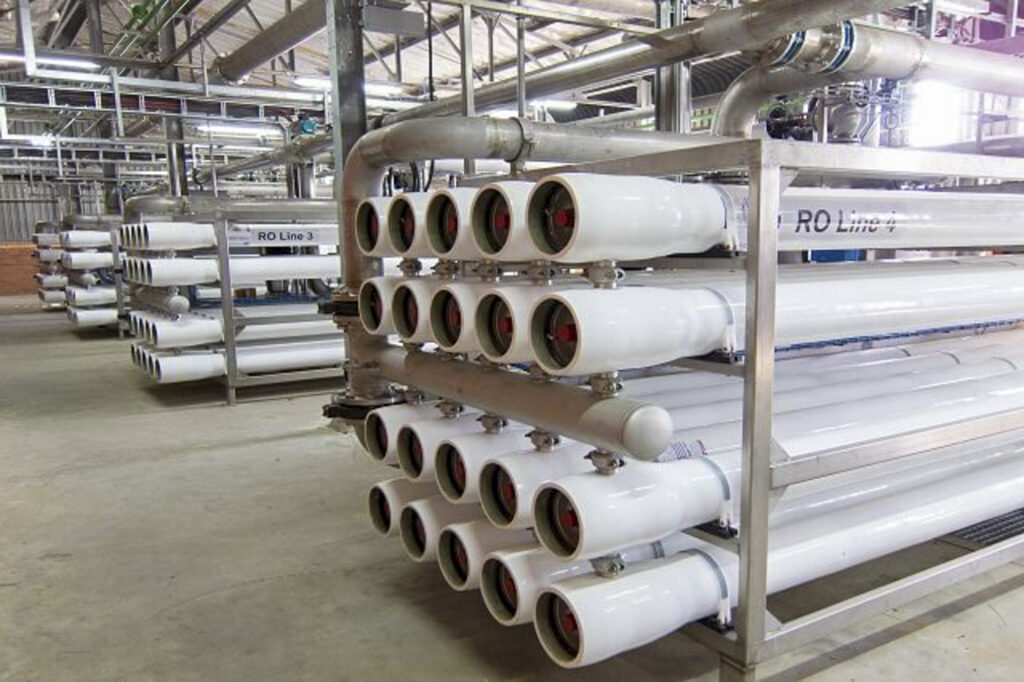
The core of the overall solution: Using state-of-the-art reverse osmosis systems, up to 99% of dissolved salts, heavy metals, and organic residues are removed under high pressure through semipermeable membranes. This efficient treatment process already produces extremely pure water while reducing the salt load in the wastewater to a minimum.
For applications that require conductivity close to zero, the final purification step produces ultrapure water. The use of mixed-bed ion exchangers ensures that even the very last remaining ions are bound. The result is ultra-pure deionized water that serves as the ideal process water, meeting even the most stringent requirements in your production process.
To meet the specific requirements of the industries mentioned above, we rely on a wide range of processes. Each system is designed to provide the most efficient treatment for your ultrapure water.
Reverse osmosis filters salts and minerals almost completely out of the water at the molecular level. It is the most efficient method for producing high-quality deionized water from raw water.
Fine filters and multimedia filters remove turbidity and particles in the initial stage. This mechanical treatment is essential for protecting the sensitive membranes and resins in your systems from contamination.
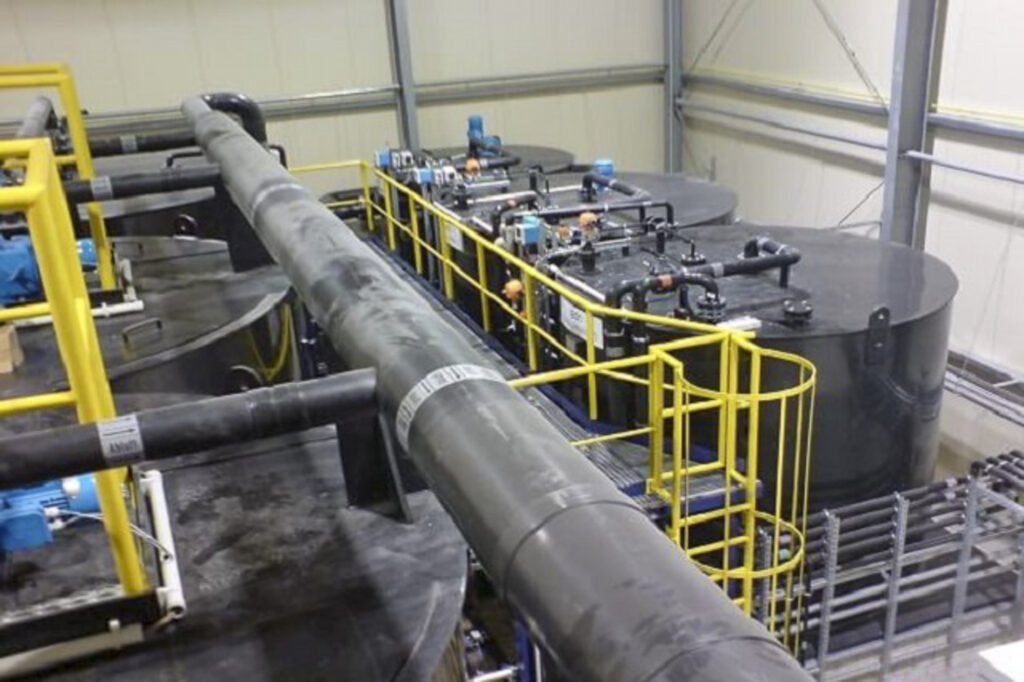
By adding additives, interfering ions or organic substances are bound and made removable. This reduces the load on the subsequent full desalination process and stabilizes the quality of the process water.
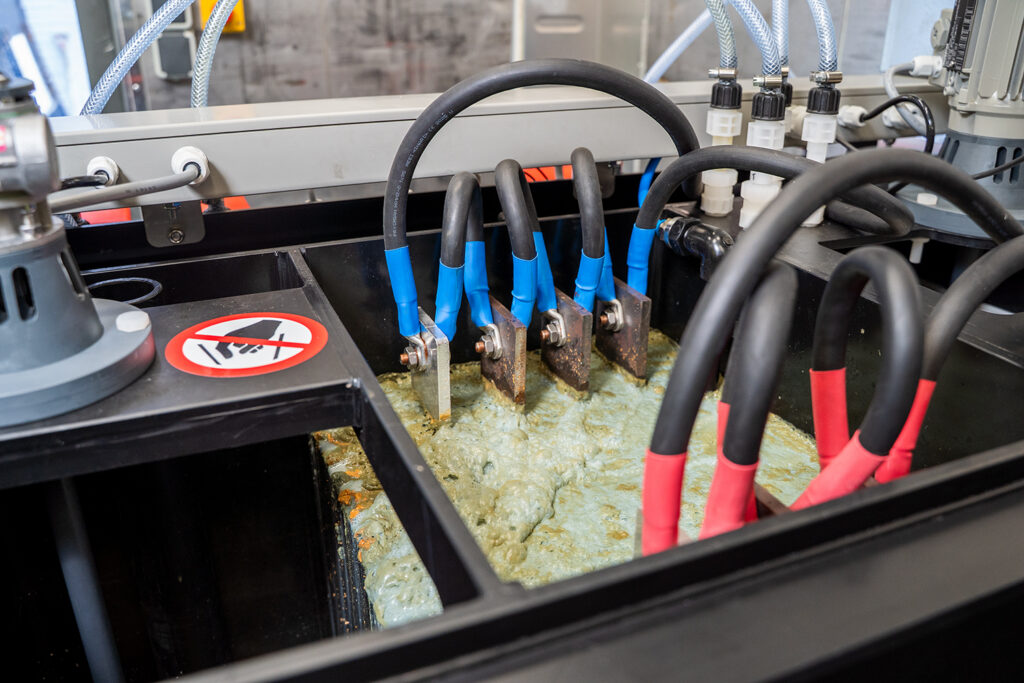
This process uses an electric current to precipitate impurities without the use of large amounts of chemicals. It is ideal for pre-treating complex wastewater before the water, after the suspended solids have been removed, enters the final reverse osmosis system.
Spaleck Wassertechnik GmbH
Robert-Bosch-Str. 6
46397 Bocholt
Phone: +49 2871 2134 – 0
E-mail: info@spaleck.de
If you have any questions about SPALECK water technology, our experts will be happy to assist you.
Here are some questions about water treatment for fully desalinated water using SPALECK water technology. If you have any further questions, please feel free to contact us.
Deionized water itself is usually harmless, but residual saline water is produced during treatment (e.g. when regenerating resins or as a concentrate in reverse osmosis). Our systems are designed to minimize this contamination of the waste water and ensure that all discharge limits are safely complied with.
The electrical conductivity (measured in µS/cm) is the indicator for the salt content in the water. The lower the value, the purer the water. A low value is crucial for sensitive processes in order to prevent corrosion, deposits or chemical reactions in your systems.
In common parlance, the terms are often used interchangeably. From a technical point of view, however, demineralized water (fully demineralized water) describes the state of maximum freedom from ions. While “distilled water” is obtained by thermal evaporation, the treatment to produce demineralized water in our systems is usually carried out more efficiently by reverse osmosis or ion exchange.
You are currently viewing a placeholder content from Vimeo. To access the actual content, click the button below. Please note that doing so will share data with third-party providers.
More InformationYou are currently viewing a placeholder content from YouTube. To access the actual content, click the button below. Please note that doing so will share data with third-party providers.
More InformationYou need to load content from reCAPTCHA to submit the form. Please note that doing so will share data with third-party providers.

More Information