


Water Treatment Without Chemicals
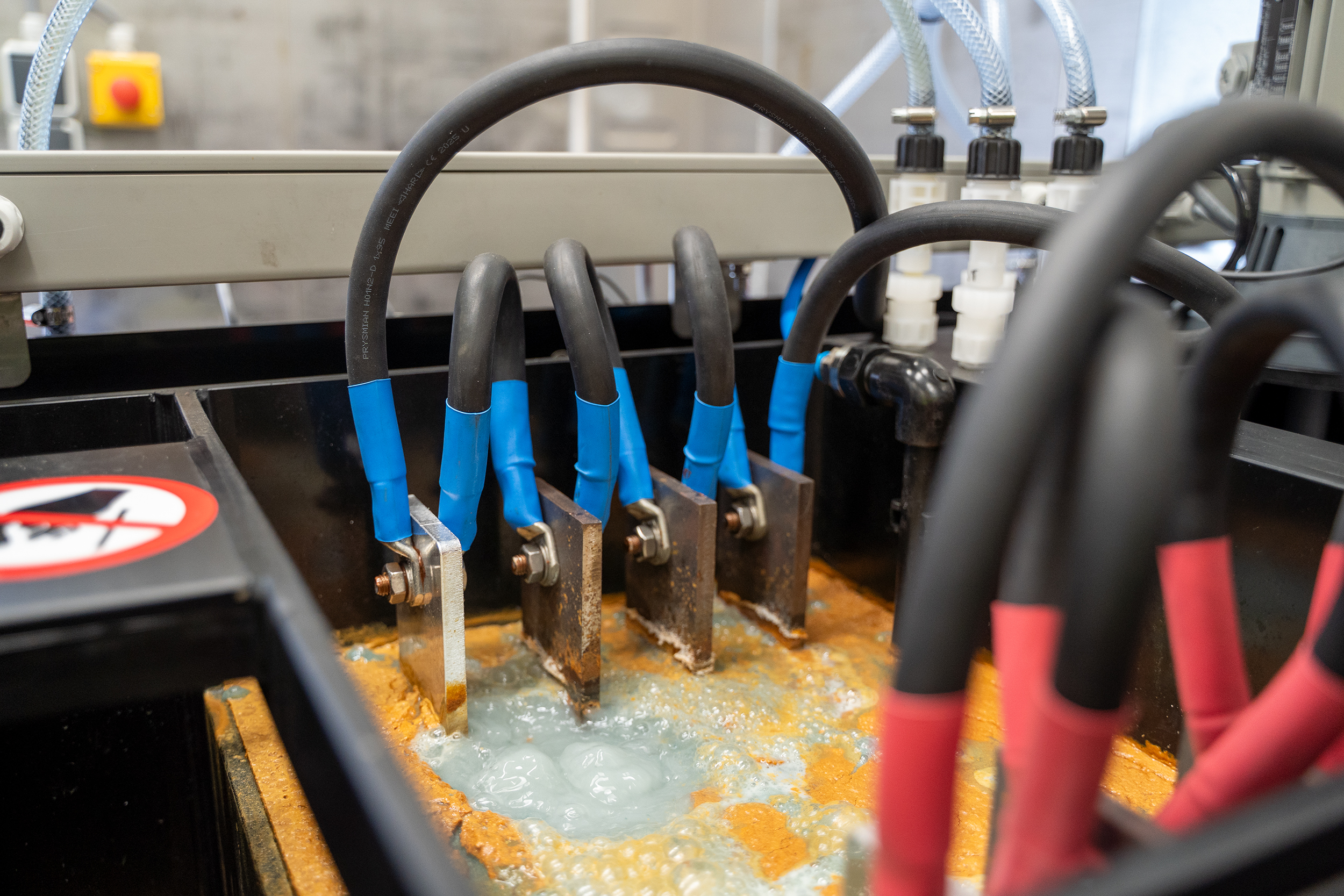
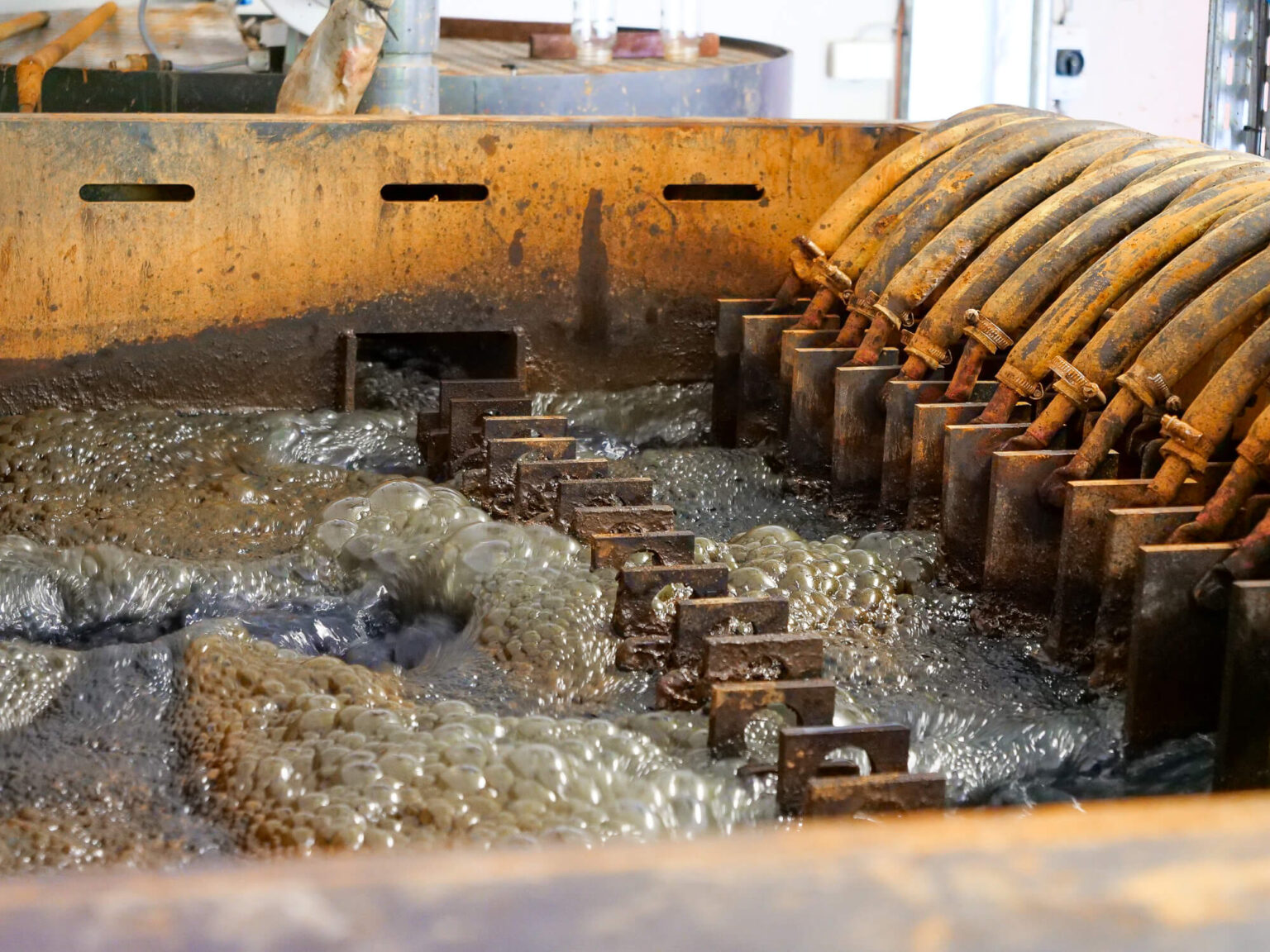
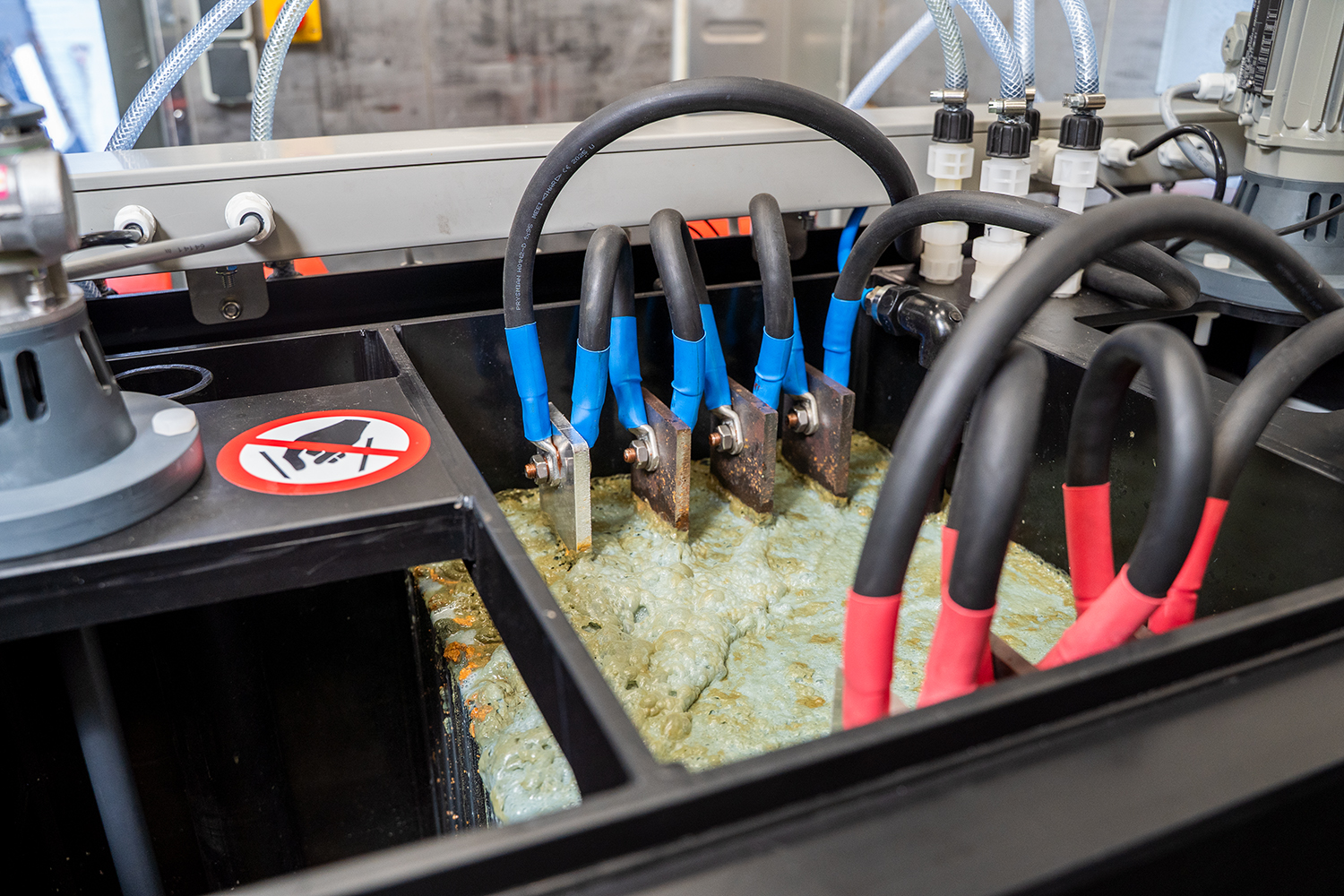
Electrocoagulation offers a highly effective alternative to traditional chemical precipitation processes. Through the use of an electric current, metal hydroxides are selectively dissolved from sacrificial anodes and combine with fine particles, emulsions, and dissolved pollutants to form filterable flocs. This process delivers excellent purification performance with minimal sludge production and drastically reduces the need for process chemicals.
Electrocoagulation is an industrial process for treating wastewater. In this process, pollutants are either bound through coagulation with metal hydroxides or electrochemically oxidized. This compact solution is modularly scalable and can be flexibly adapted to any plant size. This allows you to integrate highly efficient wastewater treatment into your existing infrastructure in a space-saving manner and—combined with additional process steps such as sand filters or oxidation—create the perfect foundation for clean process water.
Instead of chemical precipitants, this process uses electrical energy to release metal hydroxides directly into the water via sacrificial anodes. Since no precipitants are required, the costs for chemical procurement and sludge disposal in the industry are drastically reduced. This saves money and simplifies warehouse logistics.
Electrocoagulation breaks down even emulsified oils and heavy metals. By combining this process with downstream treatment steps, such as flocculation or electrochemical oxidation, you can reliably produce clean process water that safely meets even the most stringent requirements of various industries.
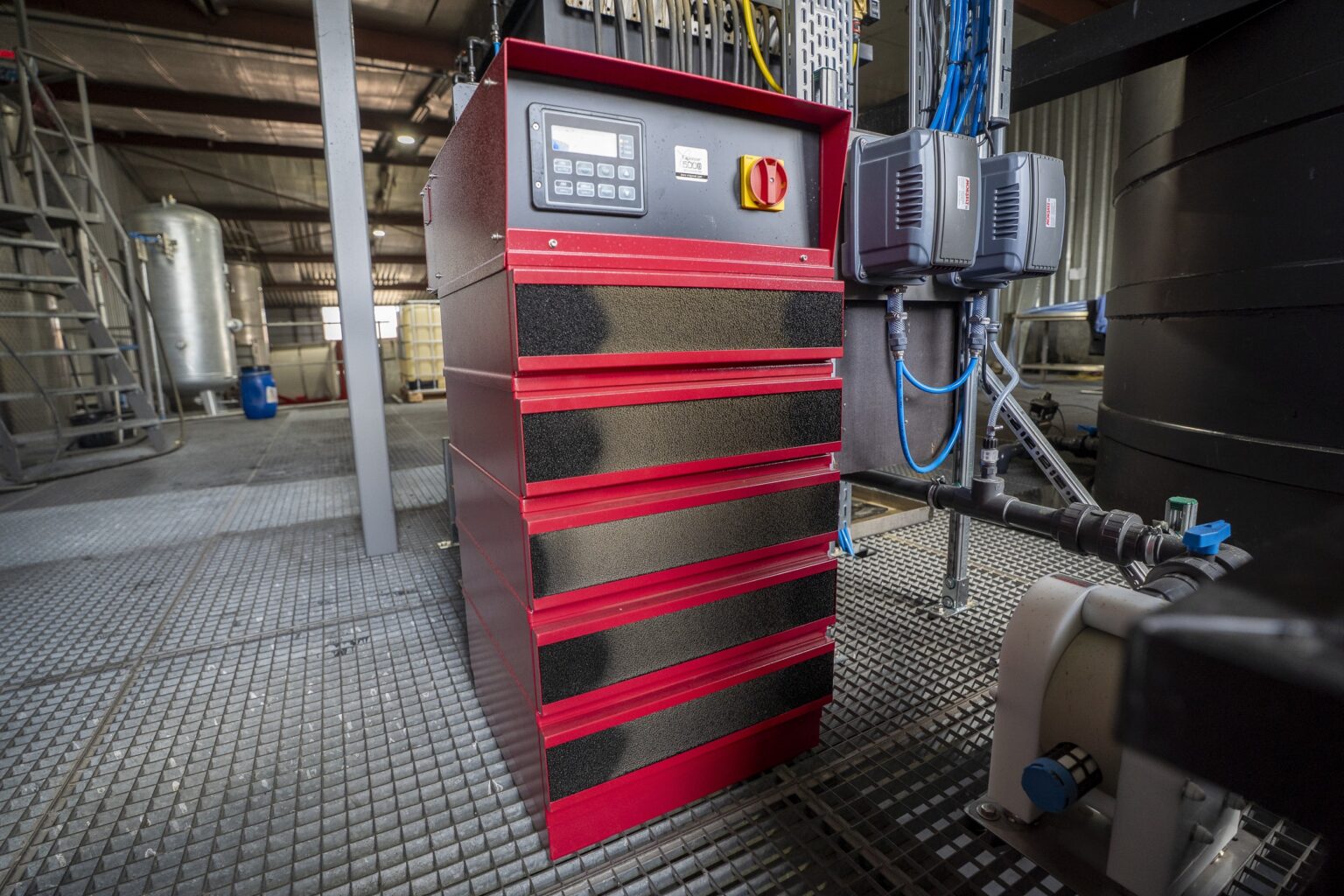
Thanks to its high response speed and modular design, the system size can be flexibly adapted to any conditions. This compact solution saves a significant amount of space and is ideal for retrofitting into existing industrial infrastructures.
The system responds to changes in the contaminant load in the wastewater at the push of a button. The automated control system minimizes monitoring requirements and guarantees consistently high cleaning performance for your industrial processes.
Industrial wastewater contains a wide variety of contaminants that directly affect processes, equipment, and environmental regulations. Electrocoagulation offers the optimal solution for this: It efficiently reduces organic and inorganic contaminants—from heavy metals to emulsions to pathogens. This process ensures consistent water quality and guarantees sustainable industrial cycles across all industries.
No two industrial wastewater streams are alike. That’s why we determine the exact electrochemical parameters for your specific load in our laboratory. We do not develop standard solutions; instead, we design a customized process that reliably removes complex mixtures of substances. This allows us to guarantee water treatment that is precisely tailored to the chemical signature of your production process.
The COD and BOD values reflect the level of organic pollution in your wastewater. Electrocoagulation binds these contaminants through flocculation using metal hydroxides dissolved from the sacrificial anodes, as well as through electrochemical oxidation, and converts them into filterable flocs. To ensure the greatest possible reduction even under extreme loading conditions, we combine this process with biological wastewater treatment as needed. This significantly reduces the organic load and lowers the fees associated with discharging wastewater into the sewer system.
Electrocoagulation uses electrical voltage fields to drastically reduce the bacterial count in wastewater by destroying the cellular structures of pathogenic bacteria. This allows downstream membrane filtration to operate at maximum efficiency after excess iron has been oxidized and reliably removed via sand filtration.
PFAS and other “forever chemicals” are difficult to degrade directly. Electrocoagulation serves as a crucial process step here: It specifically forms metal hydroxide flocs from the sacrificial anodes, to which the negatively charged head groups of the PFAS molecules attach via electrostatic attraction and hydrophobic interactions, ensuring their reliable removal. At the same time, oxidative side reactions occurring directly on the electrode surfaces break down even the stable carbon-fluorine bonds (defluorination). This thorough pretreatment protects downstream filters from premature fouling and ensures the highest water purity at the highest efficiency.
Pesticides and herbicides pose a particular challenge due to their stable molecular structure. Electrocoagulation breaks down these complex compounds electrochemically or incorporates them into the resulting floc matrix. To ensure that discharge levels remain well below the often strict limits, this process serves as an ideal preliminary step for mechanical floc separation and subsequent adsorption (e.g., using activated carbon). This allows you to achieve efficient and reliable water treatment even with high levels of pesticide contamination.
Organic oils and greases cause major problems in many systems. Electrocoagulation solves this challenge electrochemically: It breaks down even the most stable emulsions and binds the grease components into a stable floc structure. Instead of causing blockages in filters and system components, these substances are reliably separated. This significantly extends the maintenance intervals for your industrial plant and ensures trouble-free wastewater treatment for safe discharge.
Heavy metals in wastewater are highly toxic and subject to the strictest legal limits. Electrocoagulation directly converts dissolved metal ions into insoluble hydroxides through electrochemical reactions, or binds them to metal hydroxides from the sacrificial anodes. These settle as stable flocs and can be completely separated mechanically. Unlike conventional chemical processes, this method significantly reduces the amount of sludge and ensures process reliability by reliably eliminating even complex metal loads. This ensures that your water treatment complies with standards and protects both the environment and your industrial infrastructure.
Electrocoagulation uses the formation of metal hydroxides from sacrificial anodes via electrical energy to form flocs that bind pollutants. Thanks to intelligent control and robust technology, our process dynamically adapts to your wastewater load. This allows you to achieve highly efficient treatment and consistently high water quality for your effluent discharge without the need for biological processes.
When a specific DC voltage is applied, metal ions are released from the sacrificial anodes into the wastewater. These ions act as highly active coagulants and immediately initiate a chemical reaction with the dissolved pollutants, without the need to add any chemicals.
In wastewater, electrostatic repulsive forces cause pollutants such as organic molecules or PFAS to remain stable and finely dispersed. Electrocoagulation specifically counteracts this repulsion: by neutralizing the charges, the system breaks down, allowing the pollutants to combine into larger, stable flocs. This paves the way for final separation.
In the final step, the resulting flocs are mechanically separated from the treated water. Depending on the requirements, this is done through sedimentation or flotation. The separated thin sludge is thickened and dewatered, resulting in a solid filter cake. This drastically reduces the volume of material that needs to be disposed of. The result is clear, treated water that can be safely discharged.
As a versatile technological solution, electrocoagulation provides process reliability in treating a wide range of water qualities. Tailored precisely to your industry, the process achieves exactly the purity class required by your operations.
Electrocoagulation is designed here as a highly efficient component within a multi-stage treatment process. By selectively removing coarse solids, the process protects your on-site wastewater treatment systems from massive buildup and increases their operational reliability. The goal here is not to recycle the water, but to achieve a significant economic advantage: The pretreatment conditions the water so that it can be discharged directly and with high efficiency—rather than having to dispose of it externally as hazardous waste at extreme cost.
Recirculating process water is a powerful tool for securing a site’s long-term viability. Electrocoagulation serves as a crucial preliminary step in this process, efficiently removing coarse contaminants and disruptive process residues. Only this thorough pretreatment lays the foundation for downstream modules that ultimately condition the water for sustainable multiple uses in your production. Where a closed-loop system is not efficient, the process at least ensures cost-effective direct discharge instead of expensive external disposal.
Spaleck Wassertechnik GmbH
Robert-Bosch-Str. 6
46397 Bocholt
Phone: +49 2871 2134 – 0
Email: info@spaleck.de
Electrocoagulation offers a reliable solution for contaminated wastewater. Through targeted oxygenation, pollutants are broken down, COD/BOD levels are reduced, and the water is prepared for reuse or safe discharge.

Cooling lubricants, emulsions, and metal residues place a massive burden on wastewater. Electrocoagulation electrochemically breaks down these stable compounds, reliably reduces COD levels, and directly removes dissolved metals. The result is clearly treated water that is ideal for reuse in cooling circuits. This process protects your infrastructure from wear and tear, extends maintenance intervals, and guarantees process-stable water treatment—even with fluctuating loads in industrial production.
High levels of greases, proteins, and starch pose major challenges for wastewater treatment. Electrocoagulation breaks down these organic compounds and emulsions electrochemically by directly incorporating the contaminant particles into a separable floc matrix. The process drastically reduces COD and BOD levels and delivers hygienically clean process water. Compared to biological systems, the plant responds immediately to production peaks or cleaning cycles (CIP) and ensures reliable compliance with strict discharge regulations for your industrial production.
Pigments, resins, and chemical binders require particularly powerful treatment. Electrocoagulation destabilizes these hard-to-degrade substances using targeted electrical pulses and incorporates them into a stable floc structure. Unlike biological treatment, this process has high process reliability and handles fluctuating concentrations of dyes and solvents. The result is clear water, free of suspended solids, which significantly reduces the chemical oxygen demand (COD) and is optimally prepared for subsequent production steps or safe discharge.
Complex organic compounds, solvents, and active ingredient residues require technologically advanced purification. Electrocoagulation breaks down these molecular structures using targeted electrochemical pulses and effectively binds them into separable flocs. Unlike biological systems, this process is unaffected by toxic inhibitors or highly fluctuating pH levels. You receive process-reliable water for your production, minimize costly disposal fees, and ensure compliance with the strictest limits in industrial water management.
Fiber residues, starch, and organic additives result in high wastewater loads in paper production. Electrocoagulation electrochemically destabilizes these fine suspended solids and colloids, allowing them to be efficiently separated and, in some cases, even recovered as raw materials. The process sustainably reduces COD and BOD levels and operates independently of temperature fluctuations or toxic process chemicals. This enables the large-scale recirculation of treated water back into the production process, improves your water balance, and significantly reduces costs for fresh water and wastewater.
Every production process has its own ecological footprint and specific wastewater parameters. Electrocoagulation can be precisely tailored to your individual load profiles to reduce pollutants electrochemically and reuse water highly efficiently. Since this process does not rely on sensitive biological systems, it adapts flexibly to your production cycles. We design the safest, most sustainable, and most cost-effective water treatment solution for you—tailored precisely to your industrial needs.

If you have any questions about SPALECK water technology, our experts will be happy to assist you.
Here are some questions about electrocoagulation. If you still have questions, please feel free to send us a message.
This is one of the greatest advantages: While biological processes can take a long time to adapt to new contaminant loads, electrocoagulation is a purely physicochemical process. An increase in flow rate or pollutant load is addressed by increasing the input of metal hydroxides through an increase in current. This ensures consistent treatment performance.
Maintenance focuses primarily on the periodic replacement of the sacrificial anodes. Modern systems have automated cleaning functions to prevent passivation of the electrodes. Compared to biological systems, there is no need for complex monitoring of bacterial cultures, which significantly simplifies operation.
The main cost factors are electricity consumption and wear on the sacrificial electrodes. However, since the process does not require flocculants and the disposal costs for the resulting sludge are usually lower than those for purely chemical processes, electrocoagulation is more efficient in many cases.
In chemical precipitation, metal salts are added in liquid form, which increases the salt content in the water. In electrocoagulation, flocs are formed by the dissolution of sacrificial anodes. This saves storage space for chemicals, reduces the amount of sludge, and results in less salinization of the treated water. It also eliminates the need to handle hazardous substances.
You are currently viewing a placeholder content from Vimeo. To access the actual content, click the button below. Please note that doing so will share data with third-party providers.
More InformationYou are currently viewing a placeholder content from YouTube. To access the actual content, click the button below. Please note that doing so will share data with third-party providers.
More InformationYou need to load content from reCAPTCHA to submit the form. Please note that doing so will share data with third-party providers.

More Information