










Reduce wastewater costs - Conserve resources
Close the water loop in your production process. With modular SPALECK technology, you can reduce your fresh water consumption and minimize your environmental footprint—efficiently, safely, and cost-effectively.
Instead of raw water of varying quality, the treatment process produces water with precisely defined parameters. This prevents scale buildup, corrosion, and biofouling in your machines, extends maintenance intervals, and ensures consistent product quality.
Modern water treatment systems help you meet internal and regulatory water quality requirements. This simplifies the permitting process for sites and ensures long-term operating permits in the face of increasingly stringent environmental regulations.
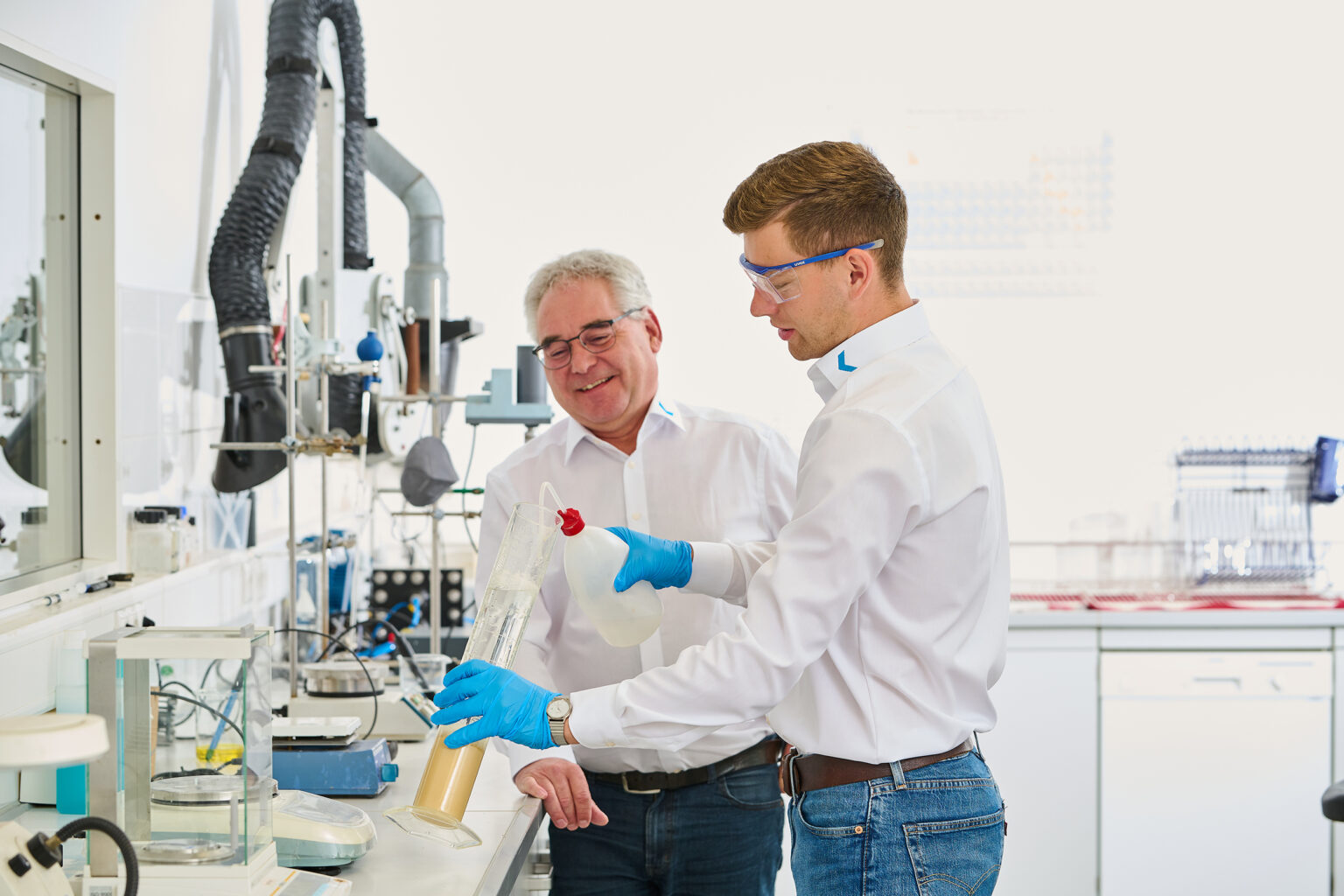
Every industrial cycle is unique and requires a precise analysis of the material flows involved. Whether it’s specific chemicals, complex organic compounds, or industry-specific byproducts—we analyze your water samples in our in-house laboratory. Based on this data, we develop the technically and economically optimal processing strategy, tailored precisely to your operation.
In closed-loop systems, particles such as sand, metal shavings, or fibers accumulate quickly. Without mechanical separation, these substances act like sandpaper on pumps and seals or clog fine spray nozzles. Our water treatment systems reliably remove these solids via a bypass stream to preserve the mechanical integrity of your entire site infrastructure.
Cooling lubricants and cleaning baths tend to emulsify in the circulation system. This leads to unwanted deposits on workpieces and causes downstream filter units to become clogged. Using targeted physicochemical processes or ceramic ultrafiltration, we separate these phases, maintain the surface activity of the recirculating water, and prevent the gradual deterioration of your process results.
Warm circulating water promotes the growth of biofilms in tanks and pipes. These deposits not only reduce flow rates, but can also cause pitting corrosion on stainless steel components. For example, we integrate disinfection stages into the system to ensure hygienically safe water quality and guarantee workplace safety at open process tanks.
Dissolved organic substances such as sugar, starch, or alcohols provide an ideal breeding ground for microorganisms. Without proper control, the cycle “goes haywire”: unpleasant odors and aggressive organic acids develop. Our water treatment systems reduce this biological load (e.g., anaerobic), recover valuable energy from it, and ensure odorless, biologically stable recirculating water.
In closed systems, the concentration of dissolved salts increases due to evaporation and continuous recirculation. This leads to massive limescale buildup in pipes and promotes corrosion on metal surfaces and seals. Through the targeted use of membrane technology or ion exchange, we maintain the conductivity and hardness level precisely within the target range. This will help you avoid costly repairs and ensure the long-term reliability of your entire process technology.
This modern water treatment process offers a cost-effective solution for safely keeping used water in the cycle. We will work with you to determine whether your specific ingredients and process parameters are optimally suited for full recycling through a thorough initial analysis. The system reliably reduces unwanted contaminants, ensures the quality of your production, and sustainably lowers your operating costs by minimizing fresh water consumption.
To successfully recycle water and minimize the impact on wastewater, we rely on a wide range of physical, chemical, and biological processes.
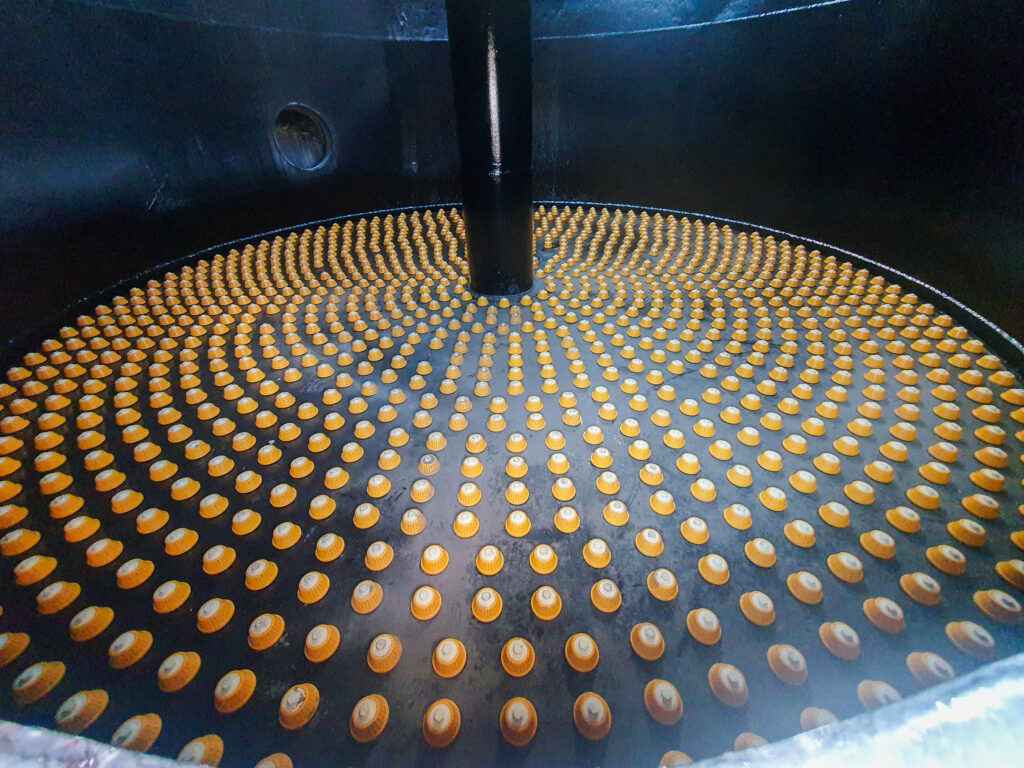
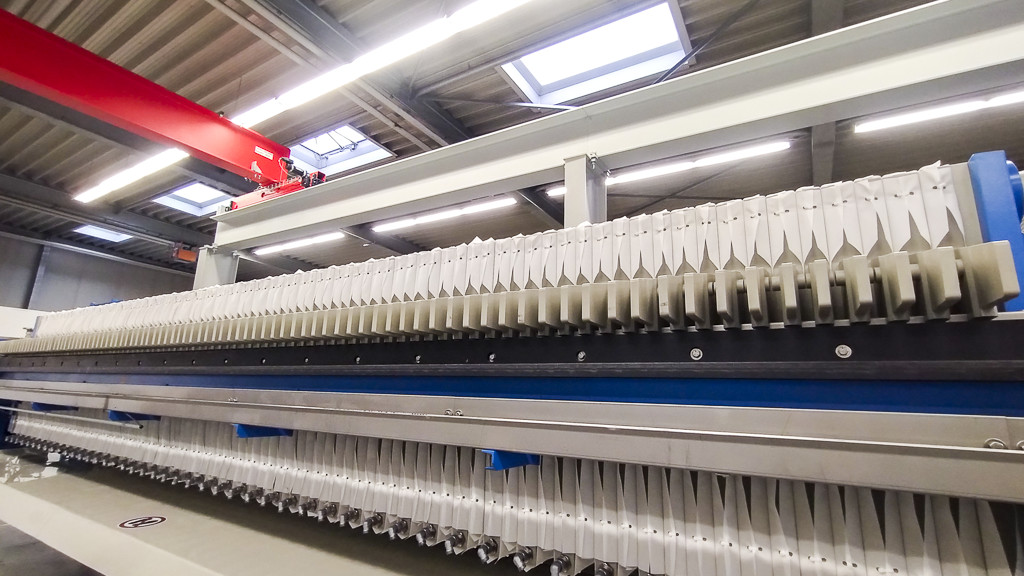
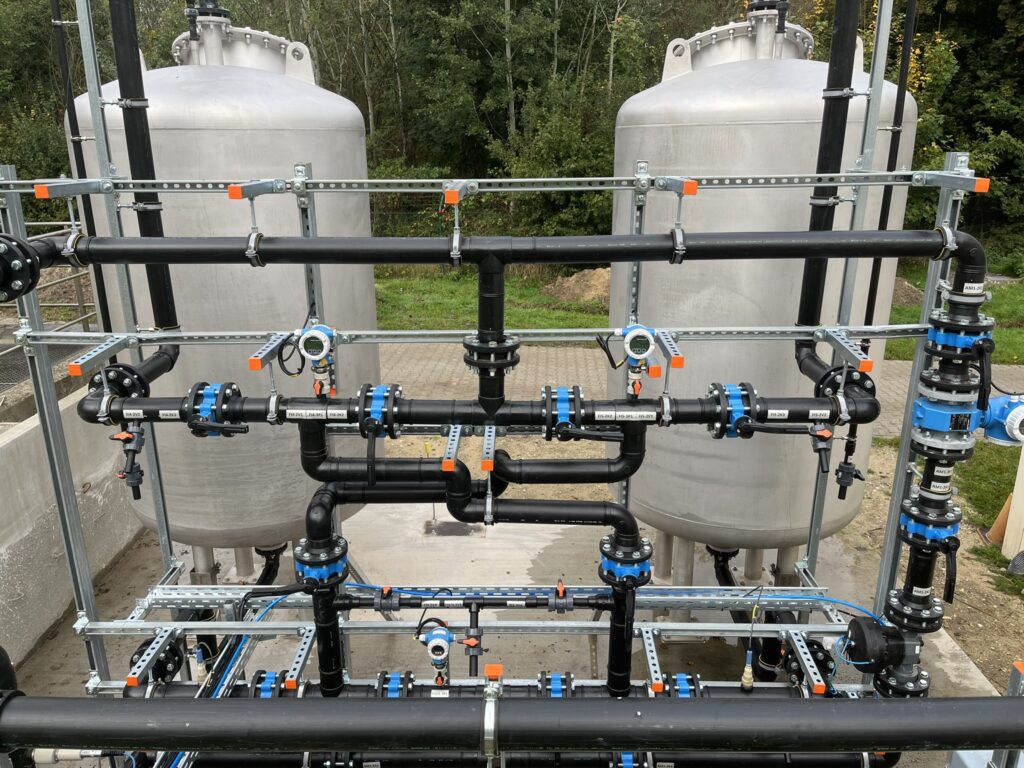
Filtration is the first step in protecting your equipment. The use of sand, multi-layer, or candle filters efficiently removes solids and microplastics. This ensures that the process water is free of particles, reliably preventing clogs in nozzles and pipes.
Using ultra-, nano-, or reverse osmosis membranes, we reliably remove dissolved substances and minute impurities. This stage is crucial for producing high-quality deionized water and makes it possible to treat even heavily contaminated water for demanding processes.
An electric current releases ions that bind to impurities and cause them to precipitate. This process reduces the use of chemicals in treatment and is particularly effective in treating complex emulsions or wastewater containing heavy metals.
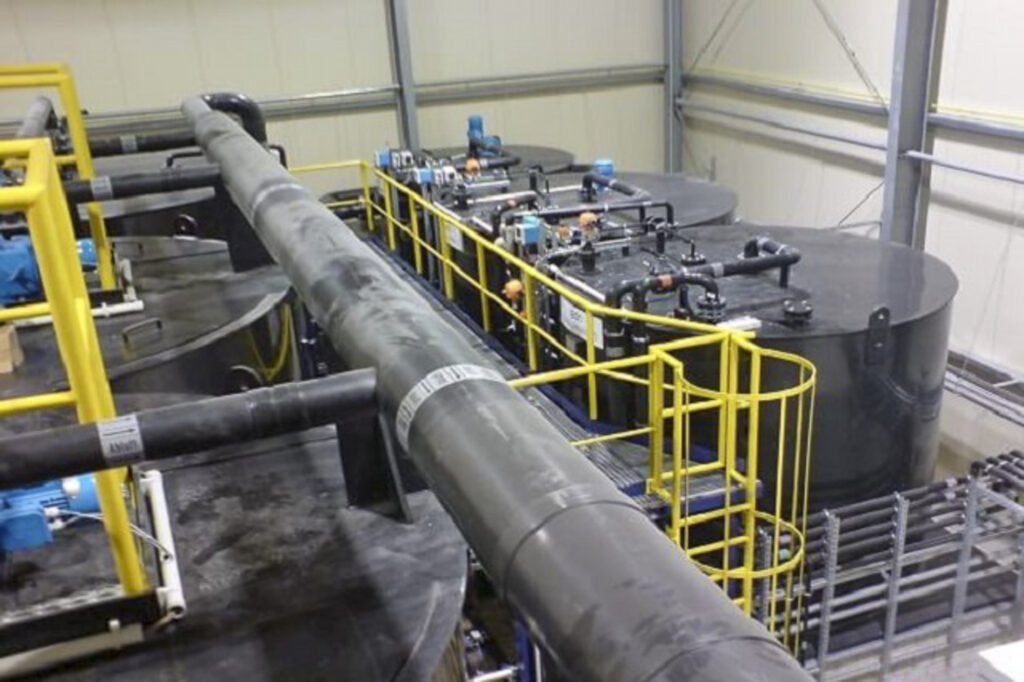
This stage efficiently breaks down high levels of organic matter and drastically reduces the amount of sludge. Our systems use this process to cost-effectively prepare contaminated water for further treatment or recycling.
Through targeted oxygen injection, microorganisms thoroughly break down any remaining residues in the process water. The result is high-quality water that can be safely reused or discharged as wastewater.
Targeted active ingredients bind dissolved substances, such as metals, and convert them into filterable flocs. This stage is essential for drastically reducing the pollutant load within the facilities and stabilizing water quality.
We start right where the wastewater is generated. By treating partial flows—for example, directly at a washing station or cooling line—we maintain a consistently high level of water quality in this area. This minimizes pipeline lengths, saves energy, and prevents wastewater from overloading the rest of the plant’s network.
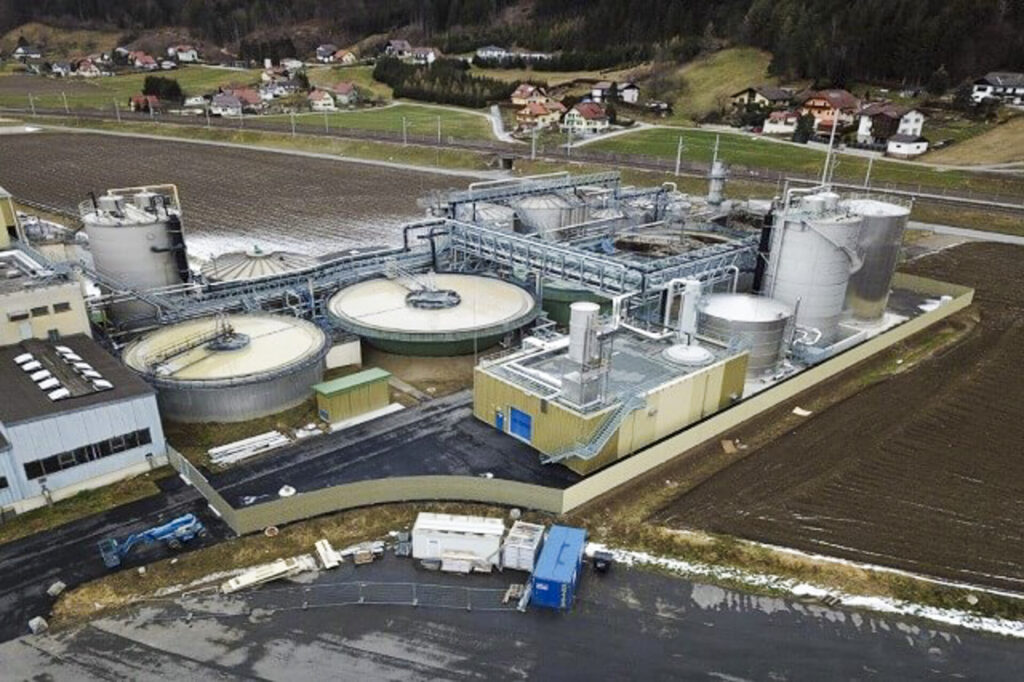
In this phase of the project, we consolidate various wastewater streams into a single central water treatment facility. The purified water is then distributed according to the cascade principle: ultra-pure water for production, moderately purified water for cooling processes or cleaning the facilities. Here’s how to reduce your fresh water usage to an absolute minimum.
For wastewater with a high organic load, we incorporate an anaerobic stage, for example. This system not only purifies the water for reuse, but also produces biogas at the same time. You’ll generate valuable energy for your facility and turn waste disposal costs into a measurable return on investment.
The recycling of process water requires precise, step-by-step purification. Our systems specifically remove contaminants and convert contaminated wastewater streams into a valuable resource—ensuring consistent quality at minimal operating costs.
In the first step, all settleable solids and coarse particles are removed from the wastewater. By using compact lamella clarifiers or filtration, we reduce turbidity immediately. This stage is crucial for preventing wear on pumps and piping and for protecting the downstream, finer cleaning stages from overload.
The primary cleaning process addresses the specific contaminants that prevent direct reuse. Depending on the requirements, anaerobic reactors are used here for the biological degradation of organic loads (COD/BOD), or the RedBox is used for the chemical-free breakdown of oils and fats. The goal is a biologically and chemically stable aquatic environment.
In the final step, the water is treated to achieve the exact target quality required. Membrane systems (ultrafiltration/reverse osmosis) or ion exchange remove the finest particles, germs, and dissolved salts. The result is high-quality process water or deionized water that can remain in the cycle indefinitely without any loss of quality.
Spaleck Wassertechnik GmbH
Robert-Bosch-Str. 6
46397 Bocholt
Phone: +49 2871 2134 – 0
E-mail: info@spaleck.de
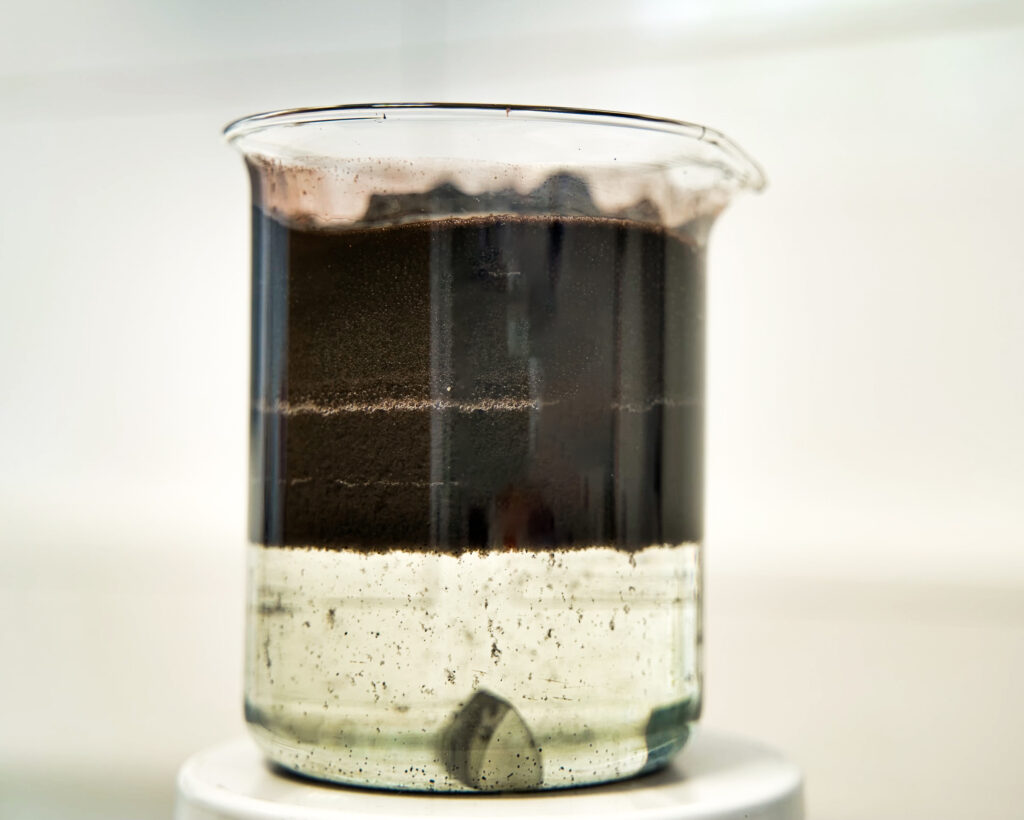
Any circulation system is only as good as the data it is based on. In our in-house laboratory, we analyze your water samples and simulate the treatment process. This ensures you receive a guaranteed solution that is precisely tailored to your process water.
If you have any questions about SPALECK water technology, our experts will be happy to assist you.
Here are some questions about the treatment of recirculating water using SPALECK water treatment technology. If you have any further questions, please feel free to contact us.
Intelligent recycling enables companies to reduce their fresh water requirements by up to 70 % to 90 %. In addition, high wastewater charges and heavy polluter surcharges are eliminated as the water is cleaned and reused internally by specialized filter systems.
You are currently viewing a placeholder content from Vimeo. To access the actual content, click the button below. Please note that doing so will share data with third-party providers.
More InformationYou are currently viewing a placeholder content from YouTube. To access the actual content, click the button below. Please note that doing so will share data with third-party providers.
More InformationYou need to load content from reCAPTCHA to submit the form. Please note that doing so will share data with third-party providers.

More Information