
Chat
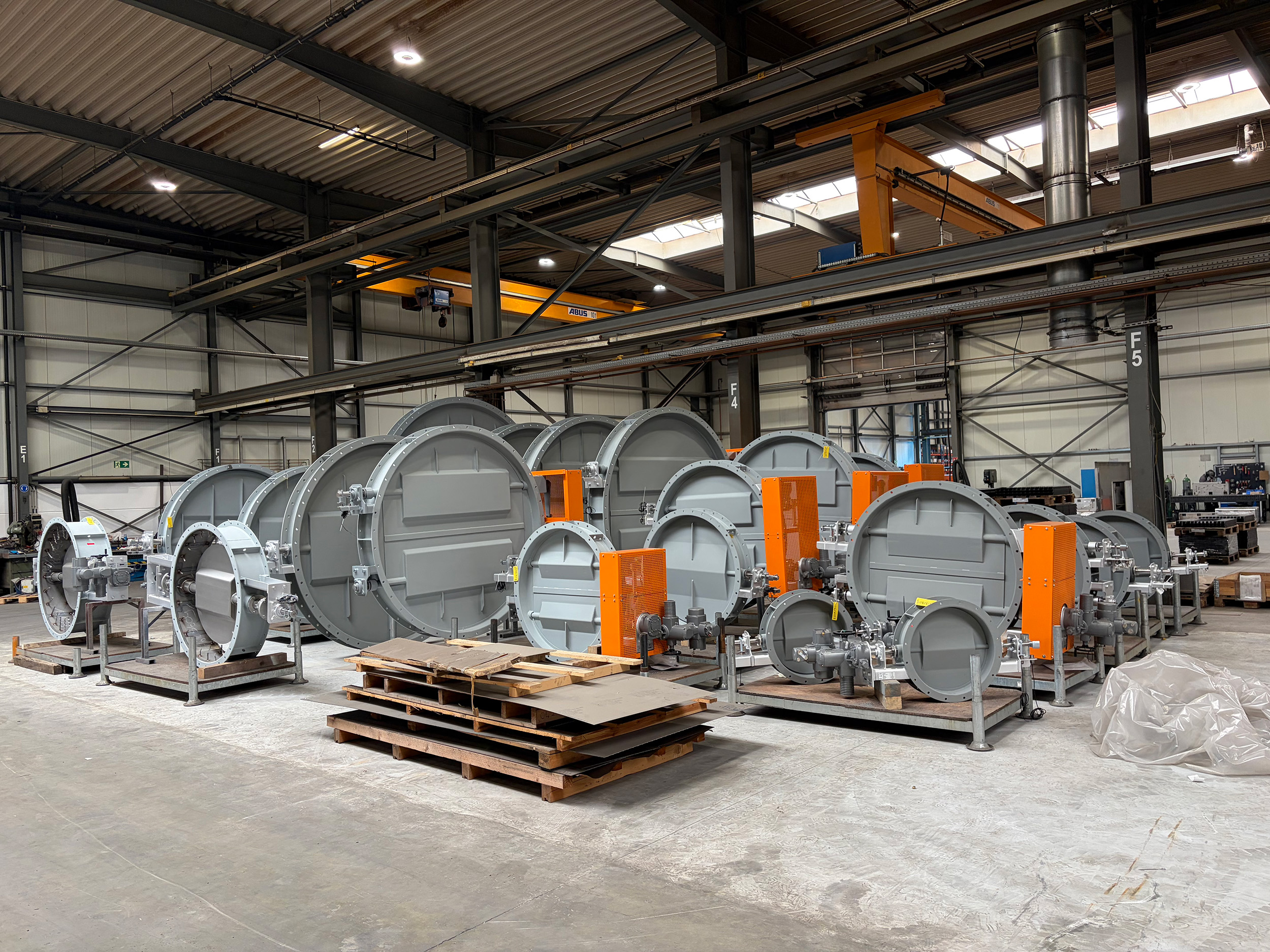
Overview of 25 industrial dampers and gate valves in a production hall, ready for acceptance at a cement plant
Industrial Valves

High-Temperature Industrial Valves for Cement Plants: HMT Completes FAT

Cement Plant HMT

Reading time 2 Minuten

Frau mit braunen Haaren vor blauem Hintergrund.

From Hanna Hitpaß

Published: 23.06.2026

Updated: 23.06.2026

Share

Blog table of contents

Major order weighing 50 metric tons ready for 1,150 °C

What you will learn in this article:

A Look Behind the Scenes in Rhede: How 25-metric-ton Special Valves Passed Rigorous Quality Testing for Their Deployment in the Czech Republic.

A project milestone has been reached: At its production facility in Rhede, HMT has successfully completed the Factory Acceptance Test (FAT) for a new cement plant line in the Czech Republic. This rigorous quality inspection marks the completion of the manufacturing phase of a major international order.

In total, the HMT team designed and manufactured 25 specialized industrial valves and gate valves. With a total weight of approximately 50 metric tons, these heavy-duty industrial valves reflect the company’s many years of expertise in the field of high-temperature-resistant flue gas valves.

Extreme demands during the ongoing process

The operational demands placed on the manufactured process components during subsequent cement plant operation are exceptionally high. The valves and gate valves must withstand extreme conditions and are designed to handle a demanding thermal profile:

Normal operating temperatures: Operation at approximately 450 °C.

Thermal peak loads: Peak values of up to 1,150 °C.


Under such thermal conditions, the mechanical properties of the material change dramatically. The precise design by HMT’s engineers ensures that all 25 valves reliably deliver the required functionality and tightness both during standard operation and during extreme temperature spikes.
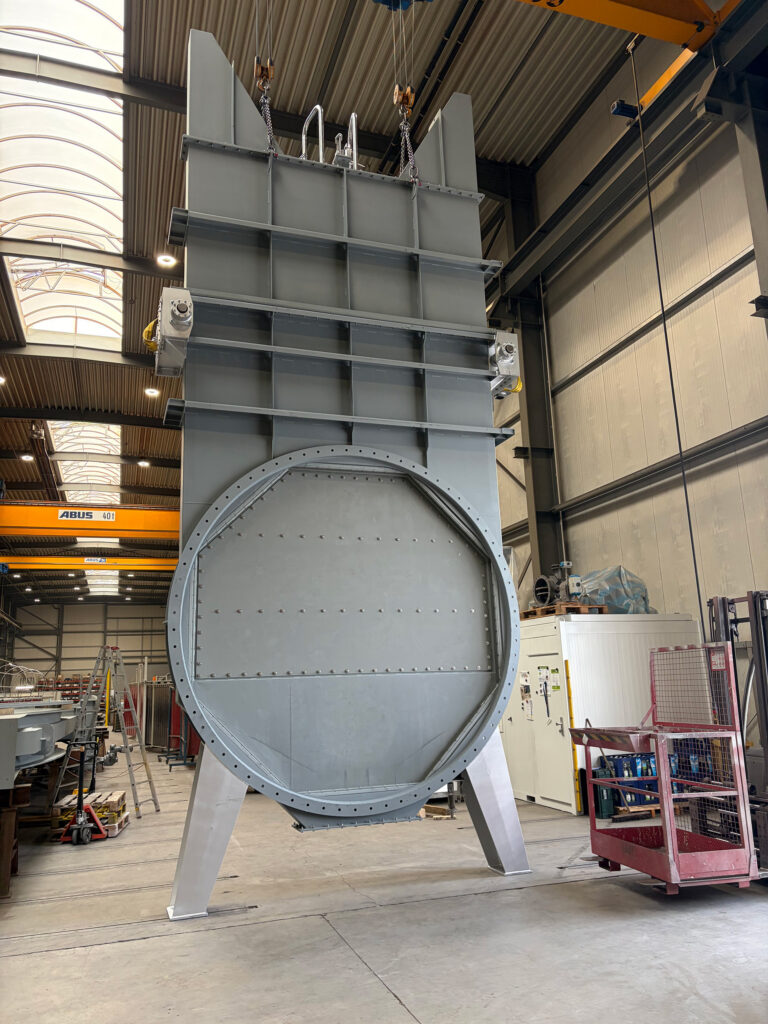
Product photo of an XXL gate valve in a production hall during acceptance testing for a cement plant

Successful plant acceptance ensures the project stays on schedule

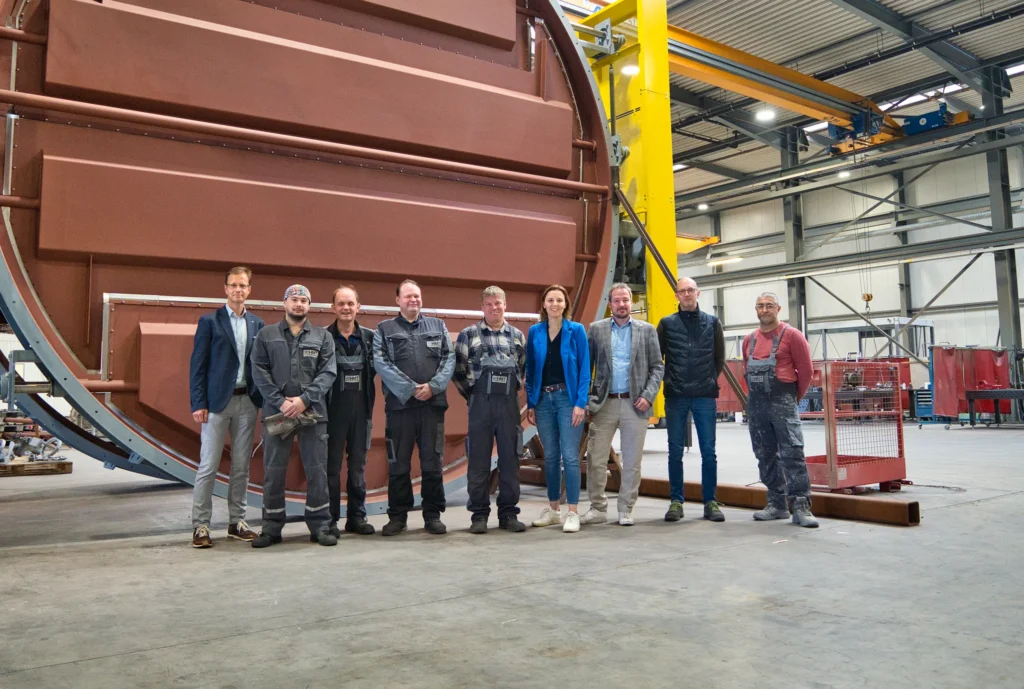
As part of the Factory Acceptance Test (FAT) at the Rhede plant, all reports were reviewed and officially signed by the customers. The clients in attendance expressed their utmost satisfaction with the manufacturing quality and the test results. The successful FAT provides both project partners with assurance that all technical specifications have been precisely met and that costly delays during subsequent installation will be avoided.

Logistics and Outlook

Following successful approval by the customer, the 50-metric-ton specialty components are now ready for shipment. The next logical step in the project involves transporting them to their destination in the Czech Republic and subsequently installing the fittings on site at the new facility.

Are you facing similar challenges at your facility, or do you need custom-designed valves for extreme temperature ranges? Contact our experts in Rhede—we’ll develop the right solution for your process.
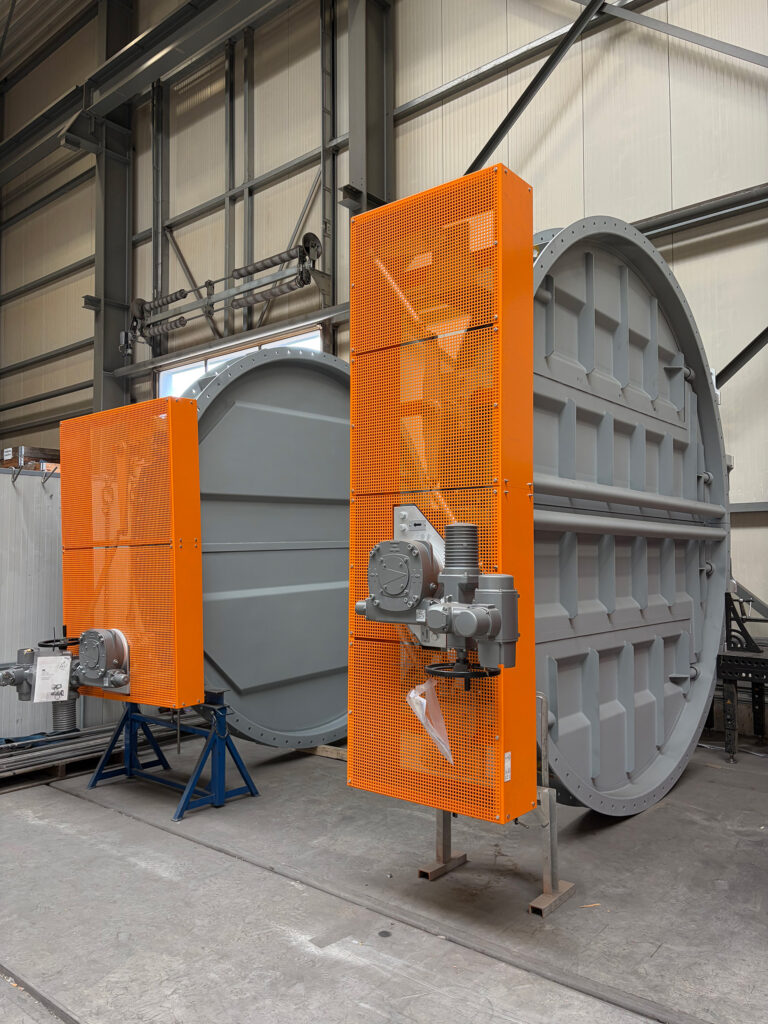
 

Product view of two flue gas dampers from HMT, ready for acceptance at a cement plant

Share

About the author

Frau mit braunen Haaren vor blauem Hintergrund.

Hanna Hitpaß

You may also be interested in these blog posts

Frequently asked questions

The precise design of a tension-shaft screening machine is always tailored to the recycled material. Factors such as the composition of the input material, its moisture content, contaminants, throughput requirements, and the recycling goals associated with the input material form the basis for this. Working with you, we define screening sizes, purity requirements, and throughput rates, and use this information to configure the exact machine settings—from screening panels to amplitude and machine features such as the SPALECK FineSideCOVER (FSC) or our MultiDECK technology with a split push rod. Learn more here about our ModularDESIGN+ concept, which we use to find the optimal screening machine for your material. We’d be happy to test the respective recycling material together with you free of charge at the SPALECK TestCenter.

Precise screening of the fine fraction results in clearly defined particle sizes. For example, if the fine fraction ranging from 0 to 10 mm is reliably screened out, downstream sorting equipment—such as eddy current separators, NIR sorters, sensor sorters, and X-ray sorters—operates more reliably and efficiently as a result. In addition, the system’s cleaning requirements are reduced, and higher material purity levels can be achieved. You can see a good example of the benefits of a tensioned-shaft screen in the reference video on municipal solid waste processing at our Swedish customer Tekniska verken. The video demonstrates how a SPALECK tension-shaft screen reduces the load on the downstream eddy current sorters and NIR sorting processes. You can find all the details about the project here.

The service life of screening mats for Flip-Flow screening machines depends heavily on the recycled material, the Recycling process, and factors such as the abrasiveness of the material stream. In many recycling applications, very long service lives are possible. Thanks to our bolt-free, modular clamping system, individual screening mats can be replaced quickly and easily as needed. You can see how this works in the video on our landing page for tension-shaft screen machines. You can get a competitive quote for replacement screening mats through our spare parts service.

READY FOR BETTER SCREENING

Together, we optimize your recycling process