Reference: Screening Machines for Household Waste
This recycling project in Sweden demonstrates the positive and significant impact that proper screening has on the plant’s overall sorting performance.
SPALECK screening machines process municipal solid waste in such a way that downstream sorting systems can reach their full potential.
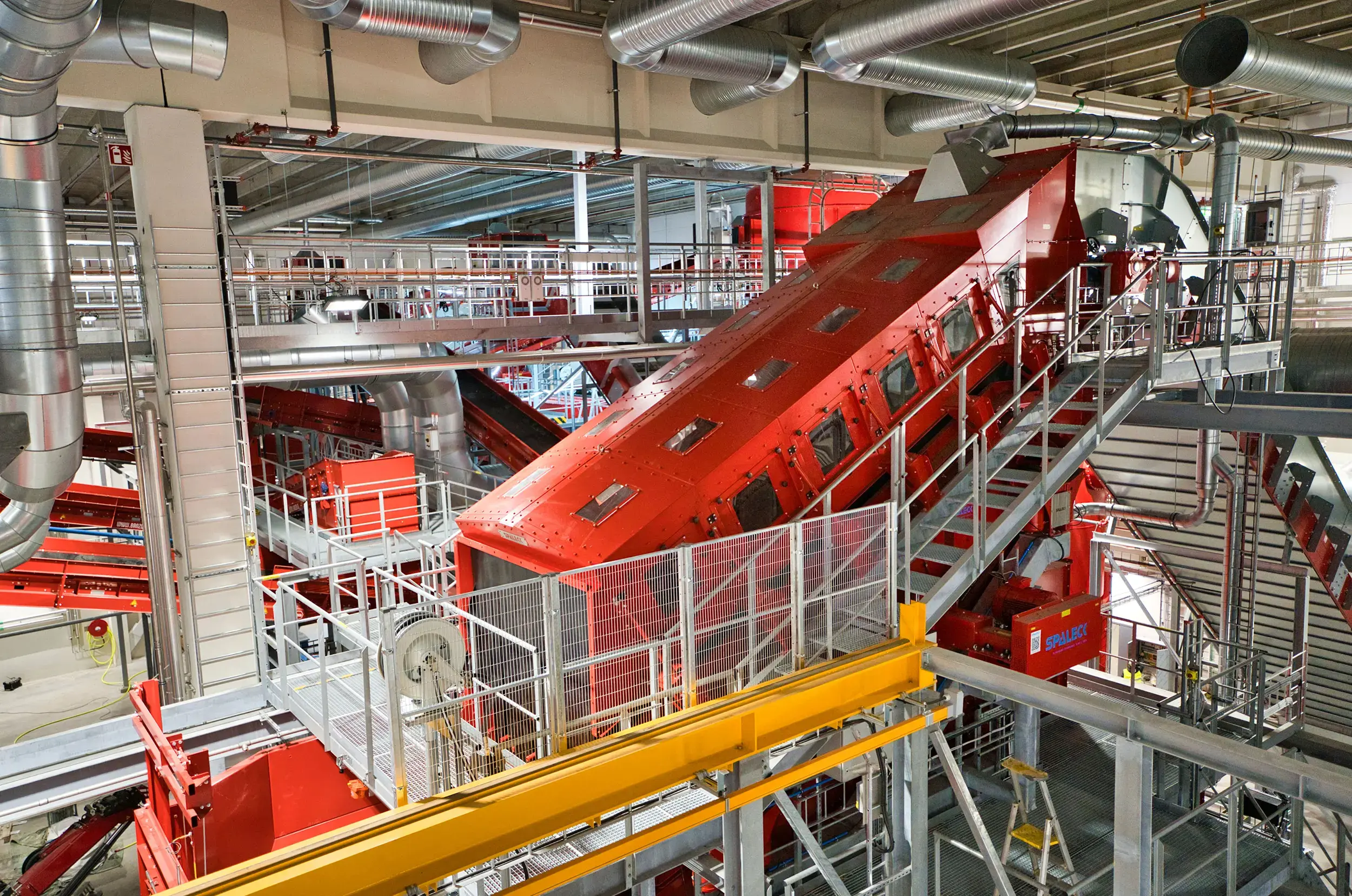
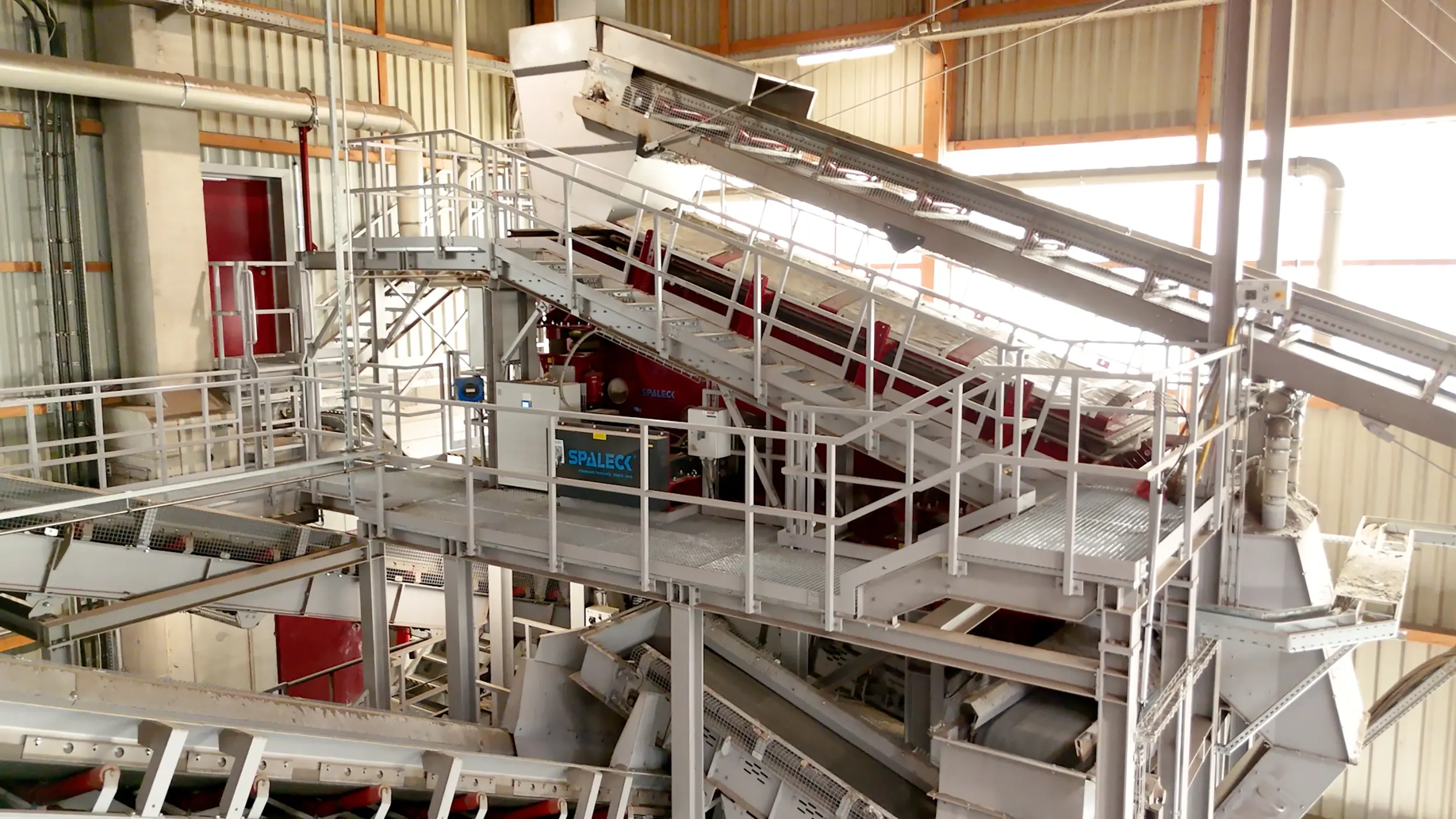
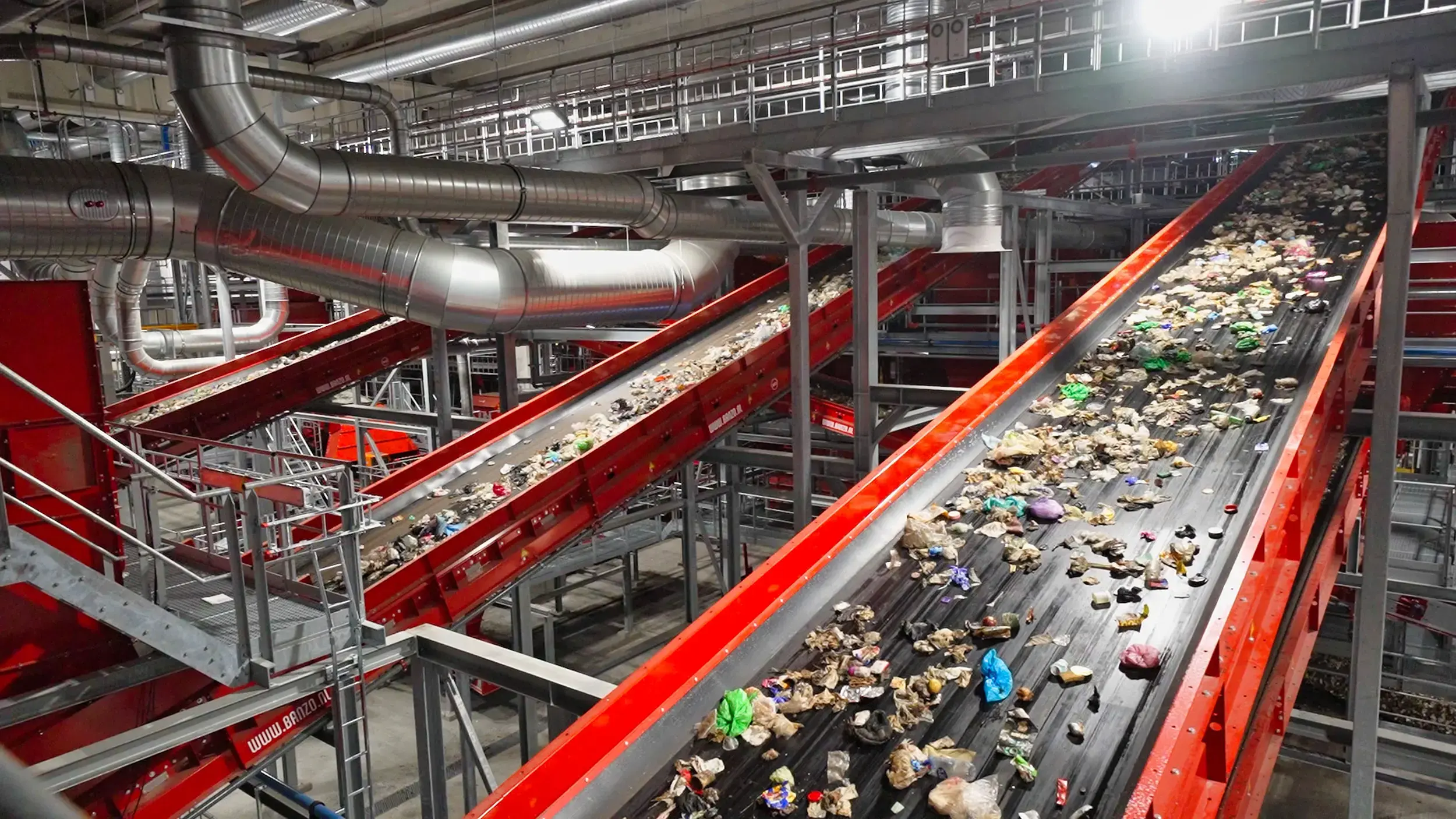
One of the most modern sorting facilities for municipal solid waste (MSW) in Europe—designed for fully automated operation with high throughput and maximum recycling rates.
Tekniska verken, Linköping (Sweden) – Plant Engineer BANZO Engineering
Municipal Waste Management Company
Household Waste (MSW)
200,000 metric tons per year
IN ACTION

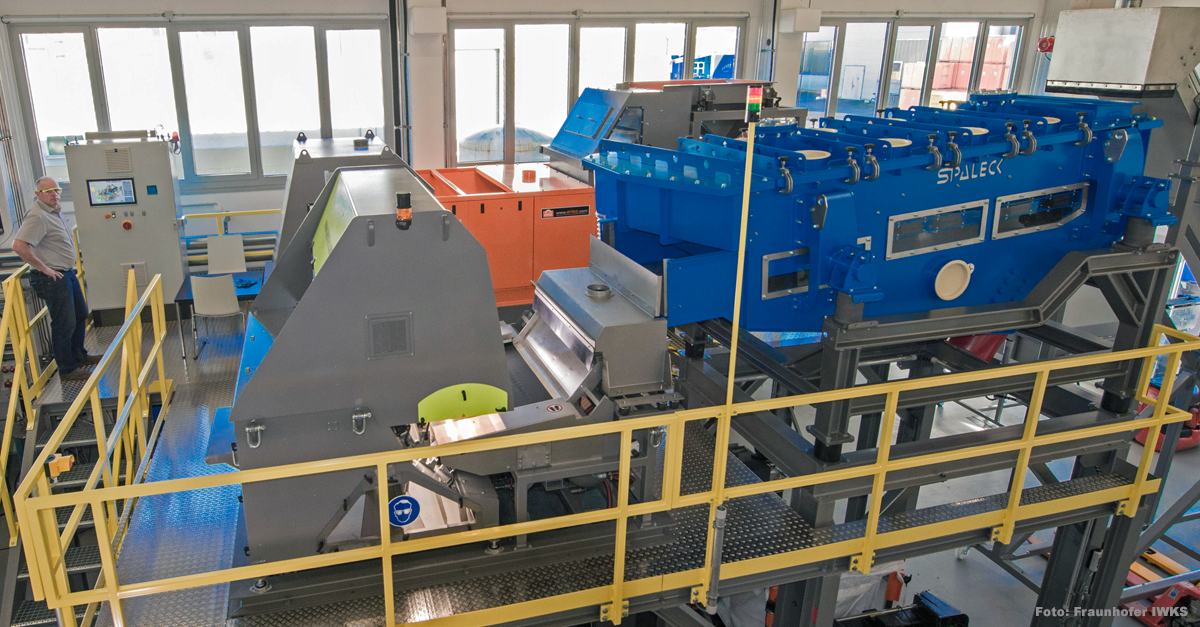
The vibrating screens sort household waste into defined particle sizes. The goal is to provide the sorters with optimal input material.
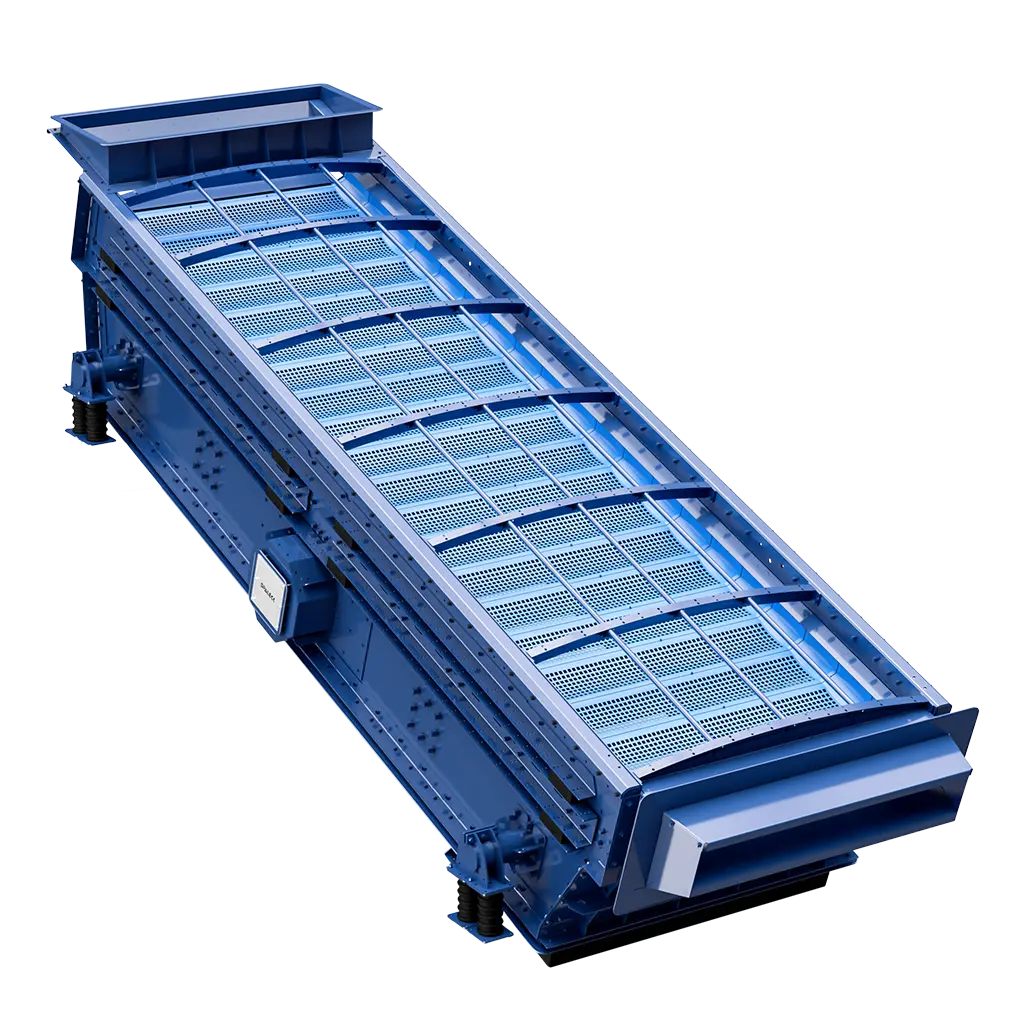
The Flip-Flow screening machine removes the moist and sticky fine material from the process, thereby protecting the sorting equipment and increasing its uptime.
Mixed household waste is one of the most challenging material streams in recycling. Composition, moisture content, and particle sizes vary widely and require high-performance, reliable recycling technology.
To ensure efficient sorting, several challenges must be addressed:

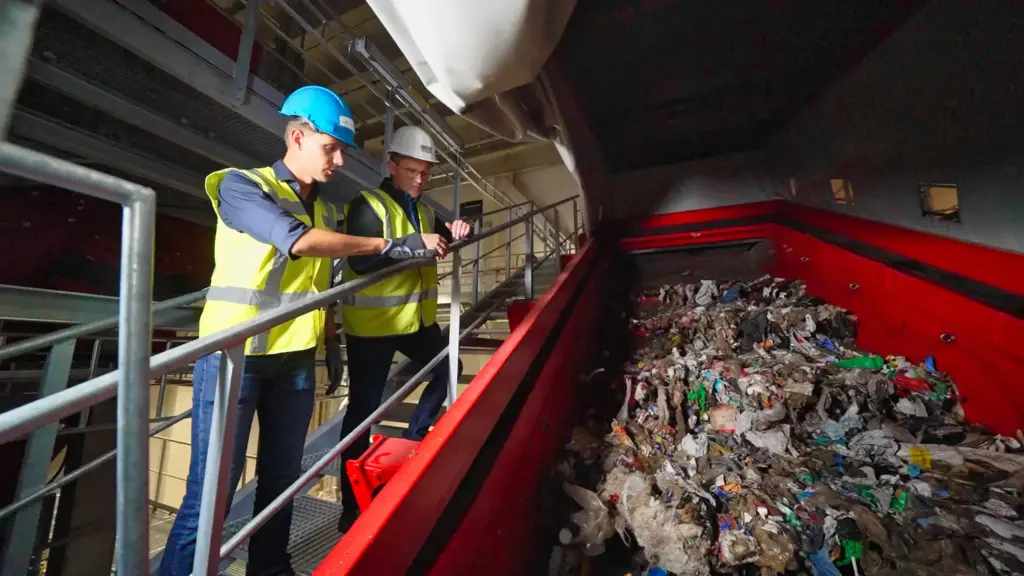
The new facility in Linköping was developed with clear goals in mind:
The video illustrates the system’s design and how the process steps work together—and shows how classification by particle size affects sorting performance.
You are currently viewing a placeholder content from YouTube. To access the actual content, click the button below. Please note that doing so will share data with third-party providers.
More Information
Screening machines for classification and fine-particle separation
SPALECK, Deutschland
Tekniska verken, Schweden
BANZO Engineering, Niederlande
BANZO Engineering, Niederlande
TRANSFERABILITY for Your Processing
The case study from Tekniska verken illustrates the central role that sorting plays in the recycling process. Precise sorting of the material stream by particle size improves the efficiency, throughput, and sorting quality of the downstream magnetic sorters, eddy current sorters, and NIR sorters.
The solutions implemented can be applied to many other applications:


Discussion with our MSW expert
Would you like to learn more about our screening machines for household and municipal waste? Or do you already have a specific project in mind? Then let’s talk about your material and your MSW processing. I’d be happy to show you more references and use cases.


In practice, existing MSW recycling plants are regularly optimized through adjustments. The aim is to continually optimize the sorting process. For us as a Screening machine manufacturer, what counts here is the close, partnership-based exchange with our customers. For example, we pass on our latest technical developments in Screening technology to our customers. In addition, our screening machines are highly customizable thanks to the ModularDESIGN+ concept. You can see exactly how this works in this video “How the right screening technology improves sorting performance in MSW recycling plants.”: https://youtu.be/8IE1C85Ca4c
The design of an MSW recycling plant is very individual. Among other things, this is determined by the material composition, particle size distribution, density and moisture of the material. The required throughput and the recycling targets of the processor are also important. These factors influence the selection of shredding, Screening technology and sorting systems as well as the overall process control. Test centers such as the SPALECK TestCenter, where recycling companies can get to know the material in detail through extensive screening tests and determine the optimum setting for the screening technology even before the system is planned, help with the selection of screening technology. The results of these screening tests are also very helpful for determining and designing the downstream sorting technology.
Precise classification of the material by size improves the Efficiency of MSW recycling plants by increasing sorting accuracy and recovery rates. More recyclable materials can be recovered thanks to defined grain bands. At the same time, downstream units are relieved, which reduces maintenance costs and downtimes.
Different screening technologies are used in MSW recycling plants. These include Recycling Waste Screens for classification, such as the SPALECK Recycling Waste Screen or Flip-Flow screening machines. Special screening technology helps not only to sort the material by size, but also to remove unwanted long parts from the target grain.
Fines are critical in the MSW material flow because they have a negative impact on sorting performance. They attach themselves to larger particles or spread uncontrollably in the material flow. This results in carryover between the fractions and makes detection by sensor-based systems more difficult. If this fine fraction were not screened, e.g. with the help of SPALECK Flip-flow screens, the cleaning effort on the sorting devices would also increase and their efficiency would decrease.
Mixed municipal waste is processed in an MSW recycling plant. This includes everything that is disposed of by private households as Municipal Solid Waste. This includes, for example, plastics, metals, paper and organic components. The material is generally very heterogeneous and places high demands on processing and sorting.
Pre-screening before the Shredder improves the operation of an MSW recycling plant by removing oversize grain from the material flow at an early stage. As the smaller material is screened out during the screening process, only the oversize grain is fed into the shredder. This relieves the shredder, reduces the energy requirement and minimizes wear on the shredding technology. At the same time, the Material flow is prepared more evenly for the further processing steps.
Recovery rates of over 90% are achieved at the MSW recycling plant in Linköping. Plastics are at over 92%, paper at over 93% and non-ferrous metals at over 94%. These good values are achieved through the combination and optimal coordination of Screening processes, material separation and sensor-based sorting within the plant.
Classification by Particle size is crucial for the sorting performance in an MSW recycling plant because sorting devices require an exact Material distribution for physical and process-related reasons. Without classification, for example, overlapping can occur in the material flow. Materials then cover each other up, making detection and sorting by sorting technology difficult or even impossible. Precise grain bands also help to increase the selectivity of the sorting technology.
Screening technology is used in MSW recycling plants to classify the material flow according to Particle size. Oversize grain, fines and long parts are specifically separated. The SPALECK Screening technology used produces very precise material fractions, which can then be optimally processed by the sorting technology.
Municipal solid waste is processed in the MSW recycling plant in Linköping in several coordinated process steps. First, the material is classified by size using screening machines. Oversize grain is shredded in parallel to the Screening process. The fractions are then separated using magnetic separators, eddy current separators and NIR and XRT systems.
The special feature of the MSW recycling plant in Linköping is that it combines high Throughput with very high recovery rates and can be operated fully automatically. Within the plant, the material flows are specifically processed through the Screening process and, in some cases, shredding. The SPALECK screening machines used produce precisely defined grain bands that enable precise separation by eddy current sorters, NIR and XRT sorters.
You are currently viewing a placeholder content from Vimeo. To access the actual content, click the button below. Please note that doing so will share data with third-party providers.
More InformationYou are currently viewing a placeholder content from YouTube. To access the actual content, click the button below. Please note that doing so will share data with third-party providers.
More InformationYou need to load content from reCAPTCHA to submit the form. Please note that doing so will share data with third-party providers.
More InformationYou need to load content from reCAPTCHA to submit the form. Please note that doing so will share data with third-party providers.
More Information